 Southern Maine Criminal Lawyer Blog










Sample Case 1: State of Maine v. M.
Defense Attorney: John Scott Webb, Esq.
Offense: Operating Under the Influence (OUI, DUI, DWI)
Sample Case 1: State of Maine v. M.
Defense Attorney: John Scott Webb, Esq.
Offense: Operating Under the Influence (OUI, DUI, DWI)
So what does the Supreme Court’s decision in Bullcoming v. New Mexico mean for the country at large? The answer is that no longer can scientific evidence be introduced into a case as if it were non-testimonial evidence. Testing and subsequent analysis of forensic evidence, far from being rote, requires a level of scientific expertise that, on occasion, may come into question. It is therefore imperative that whoever performs testing on any manner of sample must be made available for testimony so that the accuracy and reliability of the conclusions may be fully investigated. Although this doesn’t pose much of a problem for us here in Maine, many larger states may find themselves in a predicament now that highly technical and crucial forensic evidence can not be presented to the court as though it was generated by some nameless pencil-pusher.
 Many people do not realize that a DUI or other misdemeanor conviction in the United States can bar you from entering Canada. Folks who head to Canada on vacation are sometimes turned away at the border because a member the family has a DUI conviction. People on business trips, or hunting and fishing trips face the same problem.
If you have a conviction for DUI, operating after license suspension, leaving the scene of an accident, dangerous driving or many other misdemeanor charges, you are “inadmissible” under Canadian immigration law. If that is your only criminal conviction in your life you are inadmissible for 10 years. After that you are deemed rehabilitated.
If you have two or more convictions you must apply for rehabilitation with the Canadian government. It is a pretty involved process that requires you to submit a lot of documents and a fee. Processing takes up to a year. You cannot apply for rehabilitation until five years after the last action flowing from the second conviction.
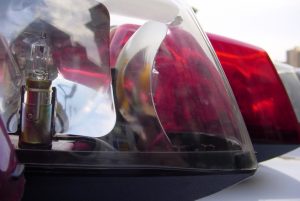 It is always surprising that so many people are stopped by the police and arrested for DUI when the reason they were stopped in the first place had nothing to do with DUI. I think more DUI arrests result from vehicle defects then from weaving.
The Fourth Amendment says that the police cannot stop you anytime they feel like it. They have to have a reason to stop you. The amount of evidence police must have to stop you depends on the situation. There are two levels of evidence that justify a stop. These are Reasonable and Articulable Suspicion, and Probable Cause.
Reasonable and Articulable Suspicion is the amount of evidence necessary to justify a belief that a person might be violating the law. That belief must be reasonable in the circumstances and based on evidence to support that reason. The officer must be able to articulate that reason as the reason for the stop. Also the reason for the stop must be related to the subsequent investigation. This means that the officer cannot just invent a reason as a pretext. The police cannot stop you on a mere hunch.
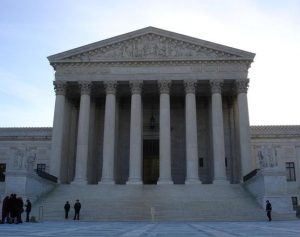 We had a rare win in a DUI case from the United States Supreme Court. Last week the Court decided that the Confrontation Clause of the Constitution really means what it says – that a witness against a criminal defendant must testify in open court and look the defendant in the eye. It’s about time.
Mr. Bullcoming was charged with DUI in New Mexico. The government sent a sample of his blood to the state lab. The lab tech tested it and said Mr. Bullcoming’s blood-alcohol level was over the limit. He filled out a form that said that and signed the form. Mr. Bullcoming asked for a trial at which he could face his accusers.
When the case came for trial the lab tech had been put on “unpaid leave.” No one knows if it was because of incompetence, poor job performance, some sort of conflict, or any number of other things that can result in being put on unpaid leave. Apparently the tech was still around. The state could have called the tech as a witness, but decided not to.
 I posted a while ago about a new law the Aroostook County DA wanted to push through. There were four very bad things in the law.
They wanted to make it illegal to drive if you were taking any prescription medication. Not just drugs that get you high, any prescription medication. If you went to the doctor and he prescribed anything, the prosecutors were going to make it illegal for you to drive.
They were going to test for it with immunoassay tests – tests that give a lot of false positive results.
 Last Friday Maine passed a law to ban texting while driving. The new law, which goes into effect on September 1, 2011, prohibits reading or manually composing any written electronic message while driving. The penalty when the law passed was a $100 fine. Today the fine is not less than $250. A repeat violation within three years brings a fine of not less than $500 and a license suspension of at least 30 days. It is not a crime for which jail can be imposed. It is a traffic violation.
It is interesting that the penalty was only $100 or so for an offense that clearly impairs a person’s ability to drive. In Maine a DUI carries a penalty of 364 days in jail, but the level of impairment is so low that you can be convicted even if the level of alcohol or drugs in your system does not impair your driving in any way. So now if you are weaving down the road texting, the worst that can happen on a first violation is a fine. But if you have a tiny bit of physical impairment from alcohol that does not appreciably affect your driving, you can go to jail for up to 364 days.
Here is the text of the law as it was passed in 2011. It has since been amended, and the fines are higher.
If police arrested you for OUI in Maine and never read you your rights, you are not alone in asking whether that changes your case. The short answer: no, a failure to read Miranda warnings does not automatically get your OUI charge thrown out. What it does affect is whether statements you made during custodial interrogation can be used against you at trial. No concept in criminal law is more widely known – and more widely misunderstood – than the obligation for police to read a person his or her rights once in custody. This article explains when Miranda applies, what "you have the right to remain silent" actually means, which amendment it comes from, and how to invoke it properly.
 New Year’s Eve is in two days. The radio and papers are full of stories of DUI checkpoints. If that doesn’t make you mad, you don’t understand DUI checkpoints.
DUI checkpoints do not make us safer. Nationally, out of 1000 drivers stopped, only three are arrested for DUI. Police officers on regular patrols watching for erratic drivers are ten times more effective than DUI checkpoints. If police are at checkpoints they are not on regular patrols and they are not catching drunk drivers.
So a thousand drivers are stopped. Every one one of those drivers who has even one drink is hauled out of the car and made to perform roadside gymnastics to prove they are OK to drive. Responsible drinkers are made to walk the line and balance on one foot in front of their neighbors. That’s a pretty big intrusion into your liberty and mine.
 The second big change in Maine DUI laws was changing when an OUI becomes a felony.
It used to be that a fourth DUI in ten years was a felony. Now a third offense in ten years is a felony. The maximum penalty jumps from 364 days in jail and a $2,000 fine, to five years in prison and a $5,000 fine.
Felony convictions also affect civil rights and jobs. A felon cannot serve in the military. In many states a felon cannot vote or hold political office. Many employers will not hire felons. Before we take away these rights we better be very sure the person should be a felon.