 Southern Maine Criminal Lawyer Blog
What Is a Misdemeanor?

A misdemeanor is a criminal offense less serious than a felony. Penalties generally include up to one year in jail, fines, probation, or a combination of these penalties. Most states treat misdemeanors as the lower tier of criminal conduct. They create a criminal record but are not as severe as felonies like armed robbery or murder.
Many U.S. states divide misdemeanors into classes or degrees based on severity. Some use Class A, B, and C. Others use first-degree, second-degree, and third-degree. Class A (or first-degree) is usually the most serious misdemeanor. Lower classes carry lighter penalties.
Misdemeanors differ from felonies in several important ways. Penalty exposure is lower. Procedural handling is often simpler – many misdemeanor cases stay in lower-level courts. But the collateral consequences can still be severe. A misdemeanor conviction appears on background checks. It can affect employment, housing applications, professional licensing, and more.
Maine's criminal code does not grade crimes as misdemeanors or felonies. The next section explains why that matters if you were charged in Maine.
Common Examples of Misdemeanors
Across the United States, these offenses commonly fall into the misdemeanor category. The specific classification varies by state. The following examples show the types of conduct involved.
Theft and Property Offenses
- Shoplifting or petty theft – Taking merchandise or property below a certain dollar threshold. Most states treat lower-value theft as a misdemeanor.
- Criminal mischief – Intentionally damaging someone else's property, such as vandalism or graffiti.
- Trespassing – Entering or remaining on property without permission from the owner.
Alcohol and Drug Offenses
- Simple drug possession – Possessing small amounts of marijuana or drug paraphernalia for personal use.
- Public intoxication – Being visibly intoxicated in a public place to the point of causing a disturbance.
- Minor in possession – An underage person possessing or consuming alcohol.
- First-offense impaired driving – Operating a vehicle under the influence of alcohol or drugs. Many states classify a first offense as a misdemeanor.
Traffic-Related Offenses
- Reckless driving – Operating a vehicle with willful disregard for safety.
- Driving on a suspended license – Operating a vehicle after the state has suspended driving privileges.
- Leaving the scene of a minor accident – Failing to stop and exchange information after a low-severity collision.
Assault and Personal Offenses
- Simple assault – Intentionally causing minor bodily harm or threatening imminent harm to another person.
- Disorderly conduct – Engaging in fighting, unreasonable noise, or other disruptive behavior in public.
- Harassment – Repeated unwanted contact or communication intended to alarm or annoy.
Other Common Examples
- Resisting arrest – Physically obstructing or interfering with a lawful arrest.
- Prostitution – Engaging in or soliciting sexual conduct for payment.
- Indecent exposure – Intentionally exposing oneself in a public setting.
- Carrying a concealed weapon without a permit – Possessing a hidden firearm or weapon without the required license.
What About "Class a Misdemeanor" Examples?
Many people search for examples of class A misdemeanor offenses after receiving a charge in a state that uses that classification. In states like Texas, New York, and Illinois, "Class A" is the most serious misdemeanor tier under those states' own statutes. The maximum jail term for that tier is set by each of those states' statutes, not by any national rule.
Which offenses sit in that tier is defined by each of those states' own statutes. The same conduct can be graded differently from one state to the next. Evidence rules, such as those governing hearsay examples, also differ across jurisdictions.
These labels are not universal. Different states use entirely different classification systems. Some states use "gross misdemeanor" or "high misdemeanor" instead of classes. Maine does not use misdemeanor classes at all. Its criminal code grades every crime except murder as Class A through Class E instead. If you face charges in Maine, the classification system works very differently. A "Class A" crime in Maine means something far more serious than a misdemeanor.
How Maine Classifies Crimes (There Is No "Misdemeanor" in Maine)
Maine does not grade crimes as misdemeanors or felonies. No "Class A misdemeanor" exists in Maine law.
Instead, under Maine law, crime classification divides all crimes (except murder) into five grades: Class A through Class E. Under Maine law, each class carries its own maximum term of imprisonment, unless a different maximum is specified by statute:
- Class A – Up to 30 years, and life or any term of years for the few crimes the statute singles out, such as aggravated attempted murder. These are the most serious crimes in Maine, such as elevated aggravated assault and the gravest forms of gross sexual assault.
- Class B – Up to 10 years.
- Class C – Up to 5 years.
- Class D – Less than one year.
- Class E – Up to 6 months.
This is the opposite of what "Class A misdemeanor" means in other states. In Maine, Class A is the highest and most severe grade – not the least serious.
What other states call "misdemeanors" maps to Maine's Class D and Class E crimes. These are the lower-level offenses. They carry less than one year of potential jail time. They are still criminal convictions. They still appear on a person's record. But they carry significantly less exposure than Class A, B, or C crimes.
Examples of Class D and Class E Crimes in Maine
If you are looking for the Maine equivalent of "misdemeanor" examples, Class D and Class E crimes are where to look.
Class D Crimes (Less Than One Year Maximum)
Class D is the more serious of Maine's two lower-level crime classes. Common examples include:
- OUI (first offense) – Under Maine law, operating a motor vehicle while under the influence of intoxicants is a Class D crime. That grade applies to a first offense with no aggravating factors; repeat OUIs, and an OUI causing serious bodily injury or death, are Class C or Class B crimes. An alcohol level of 0.08 grams or more per 100 milliliters of blood, or per 210 liters of breath, also triggers this charge.
- Assault – Intentionally, knowingly, or recklessly causing bodily injury or offensive physical contact to another person. The same conduct against a child under 6 years of age is a Class C crime.
- Domestic violence assault – Assault committed against a family or household member or a dating partner. Qualifying prior convictions make it a Class C crime.
- Theft – Taking property belonging to another person. Maine law makes theft a Class D crime when the value of the property is more than $500 but not more than $1,000.
- Violating a protection order – Violating a court-issued protection order when you had prior actual notice of the order.
Class E Crimes (Up to 6 Months Maximum)
Class E is the lowest criminal grade in Maine. Common examples include:
- Disorderly conduct – In a public place, fighting, making loud and unreasonable noise, or releasing noxious and offensive odors, so as to cause annoyance to others.
- Criminal trespass – Entering a locked or barred structure or posted land, or remaining somewhere in defiance of a lawful order to leave. Entering a dwelling place is a Class D crime.
- Driving to endanger – Under Maine law, driving a motor vehicle with criminal negligence. The conduct must endanger another person or property, and causing serious bodily injury raises it to a Class C crime.
- Minor theft offenses – Taking property worth $500 or less, with no other aggravating factor.
These are the Maine charges that fit the national idea of a misdemeanor. Maximum jail exposure for each offense is set by its class. Class D allows less than one year in jail. Class E allows up to 6 months. Individual sections then add mandatory minimums the court may not suspend: a first OUI carries a minimum fine of $500 and a 150-day license suspension, and driving to endanger carries a minimum fine of $575 and a license suspension of at least 30 days.
Why Classification Matters When You Are Charged
How a charge is classified affects nearly every part of your case and its aftermath.
Maximum jail exposure is the most obvious difference. A Class E conviction carries up to 6 months. A Class D conviction carries less than one year. A Class C conviction can mean up to 5 years. The gap between these grades is significant, and class is not always fixed: if the State pleads and proves that a Class B, C, D or E crime was committed with a dangerous weapon, the sentencing class is one class higher, and certain prior convictions can raise it the same way.
Classification also determines where a case is heard. The District Court's jurisdiction over crimes is concurrent with the Superior Court's for any crime carrying a maximum term of less than one year – that is, Class D and Class E crimes. More serious charges proceed in Superior Court, though the District Court may take a guilty plea in such a case if the defendant waives indictment and a jury trial.
Beyond the courtroom, even a Class E conviction is a criminal conviction. It appears on background checks. It may affect employment opportunities, professional licensing, and housing applications. For non-citizens, any criminal conviction can carry immigration consequences. Anyone in that situation should consult counsel. Certain convictions may also affect firearm rights under both state and federal law. Sealing a criminal history record in Maine reaches only eligible convictions – chiefly Class E crimes – and then only once at least 4 years have passed since the sentence was fully satisfied, with no later convictions and no pending charges.
Classification determines your real exposure. Understanding what class your charge falls under is the first step toward building a defense.
Speak With a Maine Criminal Defense Attorney
If you were charged in Maine with what you thought was a "misdemeanor," you are not alone in your confusion. Every state uses different terminology. Maine's system is unlike most. What matters is understanding what class your charge falls under. You need to know what penalties you actually face and what defense options are available.
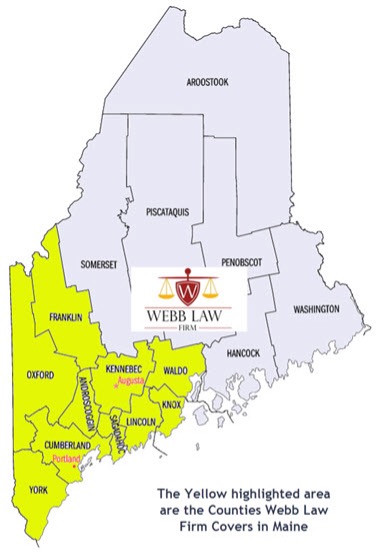
Webb Law Firm focuses on criminal defense in Maine. We handle cases in District and Superior Courts across the state. We can help you understand your charges, evaluate the evidence, and work toward the strongest possible outcome.
Contact Webb Law Firm to schedule a consultation. You can call our office or submit a contact form on our website. The sooner you speak with a Maine criminal defense attorney, the sooner you can start building your defense.

Frequently Asked Questions
Does Maine Use the Term "Misdemeanor"?
Maine's criminal code does not grade crimes as misdemeanors or felonies. Maine classifies all crimes (except murder) into five grades: Class A through Class E. Class D and Class E crimes are roughly equivalent to what other states call misdemeanors.
What Is a Class D Crime in Maine?
A Class D crime is one of the two lowest crime classes in Maine. Under Maine law, the maximum term of imprisonment for a Class D crime is less than one year. Common Class D offenses include first-offense OUI, assault, and domestic violence assault.
What Is a Class E Crime in Maine?
A Class E crime is the lowest criminal grade in Maine. Under Maine law, the maximum term of imprisonment for a Class E crime is 6 months. Common Class E offenses include disorderly conduct, criminal trespass, and driving to endanger.
Is a First-Offense OUI a Misdemeanor in Maine?
Maine does not grade crimes as misdemeanors. A first-offense OUI is a Class D crime under Maine's OUI statute. Class D carries a maximum of less than one year of imprisonment. This is roughly equivalent to what other states classify as a misdemeanor.
Can a Class E Crime Show Up on a Background Check?
A Class E conviction is still a criminal conviction in Maine. It will typically appear on criminal background checks. It may affect employment, housing, and professional licensing decisions.