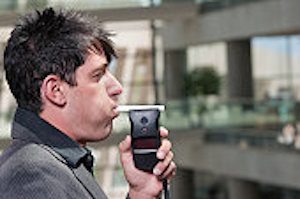
In 2013 the Supreme Court held in Missouri v. McNeely, 133 S.Ct. 1552 (2013), that a blood draw is a search requiring a warrant or a warrant exception. Since then I’ve been arguing that the same logic applies to a breath test. I based this argument on Skinner v. Ry. Labor Executives’ Ass’n, 489 U.S. 602 (1989) that held a breath test is a search. Skinner did not address the warrant issue because of special circumstances associated with regulation of the railway industry. Up until now I’ve had little success. Judges are reluctant to change decades of practice, even if that practice was unconstitutional. Last week I finally won a round in this fight.
In last week’s case my client was given field tests and then asked to voluntarily come down and take a breath test. He asked the natural question, “What if I don’t want to?” The officer told him that he would be arrested and taken to jail if he didn’t agree to take the test. If he agreed to take the test the officer promised to bring him home and not to jail, regardless of the test result. I moved to suppress the breath test for a lack of a warrant or warrant exception.
In a motion alleging a warrantless search, the state has the burden of proving there was a valid warrant exception. Recognized warrant exceptions are search incident to arrest, consent, exigent circumstances and a few others. The Supreme Court, in Arizona v. Gant, 129 S.Ct. 1710 (2009), limited the search incident to arrest exception to the extent that it cannot apply to breath or blood tests. Exigent circumstances are situations where it is extremely impractical for the officer to obtain a warrant in time to conduct a meaningful search, or some sort of emergency. In my case the state did not argue exigent circumstances. It is unlikely that any such argument would have been successful. Instead they focused on consent.
 Southern Maine Criminal Lawyer Blog


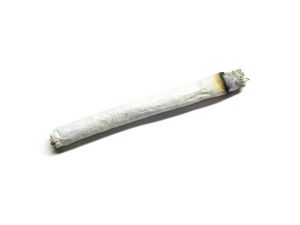 Even if you are not stoned, you can lose your license in Maine if you are convicted of DUI marijuana, also known as DUI weed.
  The Maine Association of Criminal Defense Lawyers is putting on a seminar to train lawyers to defend DUI cases. It will be held at the Hilton Garden Inn, Freeport, Maine, on August 22, 2014. (In Maine that is OUI – Operating Under the Influence.) I have the honor to be one of the instructors. I am teaching Field Sobriety Testing. Other speakers are Jan Semenoff, Matt Nichols, John Webb and Ed Folsom.
 The United States has the sorry distinction of locking up a higher percentage of its citizens than any other country. It is not that Americans break the law more than people in other countries. We don’t. The problem lies with the idea that putting people in prison is the cure for every act we believe to be criminal. The idea that being “tough on crime” by locking up people will make crime go away is ingrained in our politicians’ minds. That solution to crime utterly failed to win the war on drugs. The only thing it got us is a huge prison population at the cost of billions of dollars each year to catch, prosecute and warehouse Americans. The vast majority of these prisoners are non-violent offenders who pose little danger to the community.
 In DUI cases police routinely order people to take breath tests. For years no one gave much thought to whether such orders are legal. The 2013 case of Missouri v. McNeely may be changing that situation.