 Southern Maine Criminal Lawyer Blog
Is Maine a Stop and Identify State?
Maine is not a stop-and-identify state. No Maine statute requires you to show identification to police during a routine traffic stop or pedestrian encounter unless you are lawfully detained or placed under arrest. This distinction matters for anyone stopped by law enforcement in the Pine Tree State.

This article covers your Fourth Amendment rights during traffic stops in Maine, what makes a stop unconstitutional, how to respond if police contact you by phone, and when you should speak with a criminal defense attorney.
What Maine’s Laws Actually Say About Identifying Yourself
Some states – Nevada, Arizona, and Indiana among them – have codified “stop and identify” statutes. These laws grew from the U.S. Supreme Court’s decision in Terry v. Ohio, 392 U.S. 1 (1968). That case established that officers can briefly detain a person based on reasonable articulable suspicion of criminal activity. In those states, a person detained under a Terry stop must provide their name or face criminal penalties.
Maine has no such statute. Under Maine law, police may detain a person temporarily. This power applies when officers have reasonable articulable suspicion that the person has committed, is committing, or is about to commit a crime. However, the statute does not require the detained person to identify themselves.
An important practical distinction exists here. If you are driving, Maine law requires you to carry a valid license. An officer who makes a lawful traffic stop can ask for your license and registration under Maine’s motor vehicle statutes. This includes implied consent requirements for chemical testing. Refusing to produce your license during a lawful traffic stop can lead to additional charges.
Passengers and pedestrians face a different situation. They are not required to identify themselves to police absent probable cause for arrest. They also need not do so if there is no reasonable articulable suspicion linking them to a specific crime.
The Fourth Amendment to the United States Constitution sets the baseline:
The right of the people to be secure in their persons, houses, papers, and effects, against unreasonable searches and seizures, shall not be violated, and no Warrants shall issue, but upon probable cause, supported by Oath or affirmation, and particularly describing the place to be searched, and the persons or things to be seized.
The U.S. Supreme Court’s decision in Mapp v. Ohio, 367 U.S. 643 (1961) made this protection apply equally to state and federal officers. In practice, cooperating politely with police is often advisable. But knowing that Maine does not compel you to identify yourself gives you a foundation to protect your rights. This is especially true if you believe the stop is pretextual or unlawful.
What If the Police Were Wrong About the Basis of the Traffic Stop?
Once the prosecutor turns over all “discovery” materials, your criminal defense attorney reviews them carefully. Discovery means the evidence the prosecution is required to share with your attorney. This includes the police report, dashcam and bodycam footage, dispatch recordings, breathalyzer calibration records, field sobriety test documentation, and witness statements. Your attorney examines every piece to find inconsistencies and gaps.
Your attorney also reviews any video evidence and audio-taped calls. Dispatch recordings and 911 calls in which another driver reported dangerous driving become part of this review. If none of that evidence exists, your attorney focuses on negating the “reasonableness” of the officer’s actions.
If the evidence suggests the officer lacked reasonable articulable suspicion to pull you over, your attorney files a pretrial motion to suppress. At the suppression hearing, the officer must take the stand and explain – under oath – why the stop was justified. The judge then decides whether the stop was lawful.
In Maine, a successful motion to suppress can end a case entirely. If the judge rules the stop was unconstitutional, every piece of evidence gathered after that moment becomes inadmissible under the exclusionary rule. This typically means field sobriety test results become unusable. Breath or blood test readings also become inadmissible. Drug evidence found in the vehicle cannot be used. Any statements you made to the officer are also excluded. Without this evidence, the prosecution often has no choice but to dismiss the charges.
Dashcam and bodycam footage plays an increasingly critical role. Maine has expanded body camera use among law enforcement agencies. In our experience defending clients in York County and Cumberland County courts, dashcam footage frequently contradicts the officer’s written report about the reason for the stop. These discrepancies are powerful defense tools during suppression hearings.

Examples of Unconstitutional Traffic Stops in Maine
Unconstitutional traffic stops happen more often than most people realize. When an officer pulls you over without reasonable articulable suspicion of a crime or traffic violation, the stop violates your Fourth Amendment rights.
Common examples that arise in Maine criminal cases include the following:
Stops based solely on out-of-state plates. Officers near the New Hampshire border sometimes pull over vehicles with out-of-state registrations. They do this without any observed traffic violation. Driving with plates from another state is not a crime. It does not create reasonable suspicion either.
“Weaving within a lane” without crossing markings. A client was pulled over on Route 1 in Saco for allegedly crossing the fog line. But bodycam footage showed the vehicle stayed within its lane. Maine courts have scrutinized these stops closely. Minor movement within a lane does not automatically justify a stop. This is especially true on winding roads.
Pretextual stops where the stated reason doesn’t match video. An officer may claim a driver failed to signal a turn. But dashcam footage shows the signal was activated. When the officer’s testimony conflicts with recorded evidence, judges take notice.
Pulling over a driver for looking “suspicious.” Driving slowly through a neighborhood at night, making a legal U-turn, or pausing at a green light may seem unusual. But unusual behavior is not criminal behavior. Without an observed traffic violation or specific articulable facts pointing to a crime, the stop cannot stand.
DUI checkpoints and roadblocks. Maine courts have addressed the constitutional requirements for sobriety checkpoints under State v. Leighton. These roadblocks must follow strict guidelines: advance public notice, a predetermined plan for which vehicles to stop, supervisory approval, and minimal intrusion. A checkpoint that fails to meet these requirements is unconstitutional. Any evidence gathered there may be suppressed.
If any of these scenarios match your experience, the evidence collected during the stop could be thrown out of court.
Why Would the Police Call Me?
Many people are caught off guard when they see a call from a local police department on their phone. If you are wondering why would the police department call me, there are several common reasons.
Police may call because you are a witness to a reported crime. They need a statement from you. They may be notifying you about a traffic accident involving your vehicle. They may also be following up on a missing persons report where someone listed you as a contact.
In Maine, local police departments and the Maine State Police also call to follow up on active investigations. You might receive a call even if you have not been involved in any incident. The reason is that officers sometimes reach out to gather information. They may be investigating OUI cases, drug cases, or domestic violence complaints. You may not be the primary suspect.
Do police call suspects? Yes – officers sometimes call suspects directly to ask them to come in for questioning. They may want to “get their side of the story.” This is a common investigative technique. It may sound friendly, but the goal is to gather evidence. You have no obligation to answer questions without an attorney present. The Fifth Amendment protects your right against self-incrimination.
Late-night calls often relate to emergencies. A car accident involving someone who listed you as an emergency contact can prompt such a call. A welfare check request from a concerned family member can also result in a late-night call. A time-sensitive investigation can equally prompt calls at unusual hours.
If police call you about any criminal matter, you have the right to politely decline to answer questions. Say something like: “I would like to speak with my attorney before answering any questions.” Then contact a criminal defense attorney promptly.

Talk to a Maine Criminal Defense Attorney About Your Case
If you were pulled over and believe the stop was unconstitutional, you should speak with an attorney. If police have contacted you about a criminal investigation, speaking with an attorney before making any statements can protect your rights.
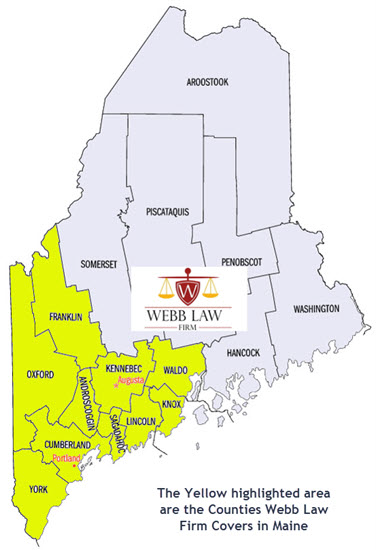
Attorney John Scott Webb has over 20 years of experience defending clients in southern Maine. He has successfully challenged illegal traffic stops in York County District Court, Cumberland County Superior Court, and Biddeford District Court. His work has resulted in dismissals of OUI charges, drug possession charges, and other criminal cases through motions to suppress. Past results do not guarantee a similar outcome, as every case depends on its specific facts.
Call Webb Law Firm today at 207-283-6400 to discuss whether your traffic stop was legal. You can also discuss how to respond to police contact. The initial consultation is free and confidential.

Would the Police Call From a Private Number?
Police officers sometimes call from private numbers. Detectives working from personal cell phones, administrative lines, or multi-line phone systems sometimes display as “Private” or “Blocked” on caller ID.
However, scammers frequently impersonate police officers using blocked numbers. A real Maine police officer will identify themselves by name. They will provide a badge number and give you a callback number at their department. If you have any doubt, hang up and call the police department’s published non-emergency number directly to verify.
Be aware of these red flags that indicate a scam rather than a real police call:
- The caller demands immediate payment to avoid arrest
- They ask for gift cards, wire transfers, or cryptocurrency
- They threaten jail time for unpaid fines or missed jury duty
- They refuse to give a verifiable badge number or department callback number
Legitimate law enforcement will never demand payment over the phone. If a real officer is calling about a criminal investigation, remember that you have the right to consult a criminal defense attorney before providing any statement. Politely tell the officer you will call back after speaking with your lawyer. Those facing related charges such as Maine age of consent violations or those with concerns about Canadian entry with a DUI should also consult an attorney promptly.

Frequently Asked Questions
Do I have to show ID to police in Maine if I’m not driving?
No, you do not have to show identification to police in Maine if you are not driving. Maine does not have a stop-and-identify statute. If you are a pedestrian or passenger, you are not required to show identification unless police have probable cause to arrest you. You also need not show identification if there is reasonable articulable suspicion linking you to a specific crime. Drivers, however, must produce a valid license during a lawful traffic stop.
Can police pull you over for no reason in Maine?
No, police cannot pull you over for no reason in Maine. Under the Fourth Amendment, police must have reasonable articulable suspicion of a traffic violation or criminal activity before initiating a traffic stop. A stop without this legal basis is unconstitutional. Any evidence gathered during the stop may be suppressed through a pretrial motion.
Why would the police call me late at night?
Late-night calls from police typically involve emergencies or time-sensitive matters. Common reasons include a car accident involving someone who listed you as a contact. A welfare check request can also prompt such a call. An active investigation that requires prompt follow-up may also result in a late-night call. If the call concerns a criminal matter, consult an attorney before answering questions.
Do police actually call suspects on the phone?
Yes, law enforcement officers sometimes call suspects on the phone. They may ask suspects to come in for questioning or to provide their version of events. This is an investigative technique designed to gather evidence. You are not required to answer questions over the phone. You have every right to request that an attorney be present before speaking.
What should I do if I think my traffic stop was unconstitutional?
Contact a criminal defense attorney as soon as possible. Your attorney can review the police report, dashcam and bodycam footage, and dispatch recordings. They will determine whether the officer had reasonable articulable suspicion for the stop. If the stop was unlawful, your attorney can file a motion to suppress the evidence. This may result in dismissal of the charges.