 Southern Maine Criminal Lawyer Blog
 The United States has the sorry distinction of locking up a higher percentage of its citizens than any other country. It is not that Americans break the law more than people in other countries. We don’t. The problem lies with the idea that putting people in prison is the cure for every act we believe to be criminal. The idea that being “tough on crime” by locking up people will make crime go away is ingrained in our politicians’ minds. That solution to crime utterly failed to win the war on drugs. The only thing it got us is a huge prison population at the cost of billions of dollars each year to catch, prosecute and warehouse Americans. The vast majority of these prisoners are non-violent offenders who pose little danger to the community.
Two sets of drug laws (federal sentencing laws) contributed the most to this problem of imprisoning too many of our non-violent fellow citizens. The first was a set of mandatory minimum drug laws based on drug quantity. The second was the Federal Sentencing Guidelines.
Congress passed laws creating mandatory minimum sentences for drug crimes based on drug quantity. Before 2011 a person who sold 500 grams or more of cocaine powder faced a mandatory minimum sentence of 5 years in prison. Five kilograms resulted in a 10 year mandatory minimum. And these drug amounts were not based on the amount of drugs the person had at any one time. The Guidelines added up the amount of drugs sold over time. A one time sale of 500 grams of coke or the sale of two grams each week for a year both resulted in a 5-year minimum sentence. Twenty years of these sentences did nothing to reduce the traffic in drugs. Worse, these laws were both arbitrary and racially discriminatory.
 In DUI cases police routinely order people to take breath tests. For years no one gave much thought to whether such orders are legal. The 2013 case of Missouri v. McNeely may be changing that situation.
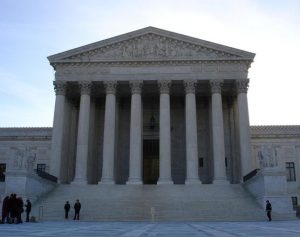 A little more than a year ago the United States Supreme Court decided a case that is having a significant effect on DUI cases around the country. In April, 2013, the Court decided the case of Missouri v. McNeely, 133 S.Ct. 1552, 185 L.Ed.2d 696 (2013). This post, and several posts to come, will look at McNeely and discuss its effect on DUI cases. This post will provide a background to that discussion.
 Much to my surprise the Maine Legislature voted overwhelmingly to reject extending the lookback for OUI’s from ten years to fifteen. In my
  The State of Maine is debating whether to increase the look back time for
  Many people I talk to think a DUI is something any lawyer can handle. As an experienced DUI specialist lawyer I can tell you that is not true. I have many hours of specialized training that most lawyers do not have. The following case is a good example of why a specialist is needed.
 Many people do not realize that a DUI or other misdemeanor conviction in the United States can bar you from entering Canada. Folks who head to Canada on vacation are sometimes turned away at the border because a member the family has a
  It is always surprising that so many people are stopped by the police and arrested for DUI when the reason they were stopped in the first place had nothing to do with DUI. I think more
  I
I