Articles Posted in Constitutional Rights

What Is Reasonable Suspicion?

Lawyer John Scott Webb with Super Lawyers 2020 and Peer Rated badges for ethical standards and legal ability.

Reasonable suspicion is a legal standard that allows law enforcement to briefly stop and detain a person when specific, articulable facts suggest criminal activity may be occurring. It is not a hunch or a guess. Officers must point to concrete observations – behaviors, circumstances, or information – that would lead a reasonable person to suspect something unlawful is happening.

The U.S. Supreme Court established this standard in Terry v. Ohio, 392 U.S. 1 (1968). The Court held that officers may conduct a brief investigatory stop based on reasonable suspicion and objective facts. This type of encounter is often called a “Terry stop.”

What Is the Fruit of the Poisonous Tree?

Professional headshot of a middle-aged man in dark suit and blue tie against brick background.
The fruit of the poisonous tree doctrine holds that evidence obtained as a direct result of an illegal search, seizure, or other constitutional violation is inadmissible in court. This rule bars not only the illegally seized items but also any secondary evidence that flows from the violation.

The metaphor is straightforward. The “tree” is the initial unlawful action by law enforcement. This might be an illegal search, a coerced confession, or an arrest without probable cause. The “fruit” is any evidence that grows from that illegal action. If the tree is poisoned, everything it produces is tainted.

Federal Law: Can a Felon Have a Gun?

The Webb Law Firm is a24-hour law firm with offices in Saco and Portland. We answer your call 24 hours a day. Free initial consultation. (207) 283-6400.

Under federal law, convicted felons cannot possess firearms or ammunition. Specifically, unlawful firearm possession makes it a federal crime for anyone convicted of a crime punishable by more than one year in prison to possess, ship, transport, or receive any firearm or ammunition. This prohibition applies in all 50 states, including Maine. It does not expire after 10, 20, or 30 years. Only specific legal action can restore these rights.

Can a felon have a gun? The direct answer is no – not without formal restoration of rights through a pardon, expungement, or other legal process.

Maine OUI lawyer John Webb in Portland and Saco, ME explains why DUI roadblocks must follow certain guidelines in order to be legal.
decade ago I commented that roadblocks are a very poor way to catch DUI drivers.  Police can stop a thousand citizens at a roadblock near me without catching a single impaired driver. This wastes taxpayer money, and is an infringement on our rights as citizens.

Proof of that comes from California. A DUI checkpoint was set up on the corner of Collier Avenue and Riverside Drive in Lake Elsinore, California.

Police claimed that this sobriety roadblock location was selected due to being a high DUI area.  Cops stopped 1,358 vehicles and questioned the people in them.

supreme-court-300x237

Do Police Have to Read You Your Rights?

Police have an obligation to read you your Miranda warnings before conducting a custodial interrogation. An interrogation means that the questions are designed to elicit an incriminating response. Meaning, routine questions such as what your name is, your address, and your date of birth are not considered to be interrogative. However, arrests can occur without a reading of Miranda as long as no incriminating questions are being asked of you. But, if police choose to interrogate you at any time after arresting you, your rights must be read to you before any questioning occurs.

In addition to being interrogated, you also must be in police custody in order for the Miranda laws to apply. Custody means that your freedom of action must be deprived in some way. Maine courts have traditionally held that an interrogation is custodial if a reasonable person in your shoes would have felt that he or she was not at liberty to end the interrogation and leave. Being in custody may mean that you are in handcuffs, in a police cruiser, at the police station, or other similar scenarios where you are not free to leave at your own will. But ultimately, there are many factors that are considered by courts in determining whether you were truly in police custody, which is why consulting with an attorney can be important.

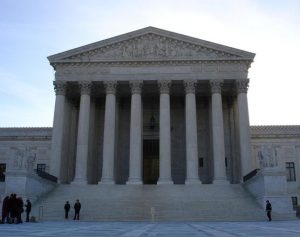
supreme-court-300x237This week the Supreme Court, in United States v. Jones, ___ US ___ (2012), decided that placing a GPS on a person’s car and tracking to movements is a search that requires a warrant.  This is an important decision for several reasons.  First, changes in modern technology make it easier for government to intrude on our privacy.   Second, it made it clear that there are two ways to analyze when a search warrant is needed.  Third, it shows that the Court may change its views of the Fourth Amendment as technology becomes more invasive of our privacy.

The facts were that Mr. Jones was suspected of drug dealing.  Drug agents got a warrant to place a GPS on his car by a certain date in Washington, DC.  They did not put the GPS on the car as specified in the warrant.  Instead, they found the car in Maryland and put the GPS on the car after the warrant date.  They tracked every move his car made for four weeks.  Using the GPS information agents found evidence that arguably tied Jones to drugs and money.  They charged him in a drug trafficking conspiracy.

Jones moved to suppress the evidence (prohibit the government from using it at trial.)  He argued that placing the GPS on his car was a search, and that the search was illegal without a warrant.

by
Published on:
Updated:

supreme-court-300x237We had a rare win in a DUI case from the United States Supreme Court.  Last week the Court decided that the Confrontation Clause of the Constitution really means what it says – that a witness against a criminal defendant must testify in open court and look the defendant in the eye.  It’s about time.

Mr. Bullcoming was charged with DUI in New Mexico.  The government sent a sample of his blood to the state lab.  The lab tech tested it and said Mr. Bullcoming’s blood-alcohol level was over the limit.  He filled out a form that said that and signed the form.  Mr. Bullcoming asked for a trial at which he could face his accusers.

When the case came for trial the lab tech had been put on “unpaid leave.”  No one knows if it was because of incompetence, poor job performance, some sort of conflict, or any number of other things that can result in being put on unpaid leave.  Apparently the tech was still around.  The state could have called the tech as a witness, but decided not to.

by
Published on:
Updated:

roadblock-300x225New Year’s Eve is in two days.  The radio and papers are full of stories of DUI checkpoints.  If that doesn’t make you mad, you don’t understand DUI checkpoints.

DUI checkpoints do not make us safer. Nationally, out of 1000 drivers stopped, only three are arrested for DUI.  Police officers on regular patrols watching for erratic drivers are ten times more effective than DUI checkpoints.  If police are at checkpoints they are not on regular patrols and they are not catching drunk drivers.

So a thousand drivers are stopped.  Every one one of those drivers who has even one drink is hauled out of the car and made to perform roadside gymnastics to prove they are OK to drive.  Responsible drinkers are made to walk the line and balance on one foot in front of their neighbors.  That’s a pretty big intrusion into your liberty and mine.

by
Published on:
Updated:

judges-300x200The second big change in Maine DUI laws was changing when an OUI becomes a felony.

It used to be that a fourth DUI in ten years was a felony.  Now a third offense in ten years is a felony.  The maximum penalty jumps from 364 days in jail and a $2,000 fine, to five years in prison and a $5,000 fine.

Felony convictions also affect civil rights and jobs.  A felon cannot serve in the military.  In many states a felon cannot vote or hold political office.  Many employers will not hire felons.  Before we take away these rights we better be very sure the person should be a felon.

by
Published on:
Updated:
Contact Information