 Southern Maine Criminal Lawyer Blog
What Is SR-22 Insurance in Maine?
An SR-22 is a form that proves you carry car insurance, and it is not a type of insurance itself. Insurers call it a certificate of financial responsibility. Your insurer files the form with the Maine Bureau of Motor Vehicles, the BMV. It tells the state that your policy meets the minimum limits Maine law sets. You may see it written as SR22 or SR-22, and Maine SR22 insurance and SR-22 insurance in Maine all describe the same filing.
Maine law decides who must carry this proof. Under Maine law, proof of financial responsibility means a liability insurance policy that meets set coverage limits. Your insurer sends the form to the Secretary of State's office, which keeps Maine's driver records and operates the BMV.
The difference matters, because SR-22 insurance in Maine is just an ordinary car policy with the form attached. Your insurer adds the filing to the policy you have now, or writes a new policy that meets the state limits. It then certifies to the BMV that you are covered.
SR-22 insurance in Maine has one job: it shows the state, month after month, that a high-risk driver still carries coverage. Maine law makes you keep that proof on file continuously. Driving while you owe that proof, without it and without the state's say-so, is a Class D crime.
Who Needs an SR-22 in Maine?
Several situations require an SR-22 before the Maine BMV restores your driving privileges. Here are the most common ones:
- OUI/DUI conviction – A Maine OUI conviction can trigger an SR-22. Under Maine law, a driver with an OUI conviction within the 10-year period may not have a license reinstated until that driver meets the financial responsibility rules.
- Driving without insurance – Driving with no proof of coverage can cost you your driver’s license. You may then need an SR-22 to get it back.
- Driving on a suspended license – A conviction for driving while suspended can add an SR-22 to the terms you must meet.
- At-fault crashes while uninsured – Cause a crash with no insurance and the Secretary of State may suspend your license. You must then give proof of financial responsibility to get it back.
- Repeat traffic offenses – Several motor vehicle violations can lead the BMV to demand that proof.
- Habitual offender status – You may ask for relief from habitual offender status three years after the revocation. The Secretary of State may lift the status and restore the license if the driver has met the financial responsibility requirements and public safety will not be endangered.
For drivers facing OUI charges, this rule bites hard. Maine law ties getting your license back to proof of financial responsibility after an OUI conviction within the 10-year period. If you already have an OUI conviction within 10 years, the Secretary of State may not reinstate the license until that proof is given. Repeat offenders also wait out a longer suspension first.
Knowing the Maine SR22 requirements early helps you plan for life after a conviction. Better yet, it gives you a reason to fight the charge first.
Maine SR-22 Requirements and Minimum Coverage
Maine law sets the minimum requirements an SR-22 policy must meet. Under Maine law, an SR-22 policy must carry these limits at a minimum:
- $50,000 for injury to or death of any one person
- $100,000 for one accident resulting in injury to or death of more than one person
- $25,000 for damage to property
- $2,000 per person for medical payments
- $500 per accident for towing and storage charges
Insurers write the first three as 50/100/25, and your policy must meet or exceed those limits. That is what the Maine SR22 requirements come down to before the state hands your license back.
Say a court convicts you of a motor vehicle offense, or finds that you committed one. Once your license comes back, Maine law requires the driver to maintain proof of financial responsibility for at least three years. That three-year window is what most Maine drivers face after an OUI.
Do not let the coverage lapse. Under Maine law, a policy certified as proof of financial responsibility may not be canceled until at least ten days after notice of cancellation has been filed with the Secretary of State. Maine law also lets the Secretary of State drop the demand for proof three years after the date of the demand. Until that happens, the coverage has to stay on file.
How to File an SR-22 in Maine
Filing an SR-22 in Maine is straightforward enough, but a few details still trip drivers up. Here is what to expect:
- Find an insurer that files them. Not every car insurance company in Maine handles SR-22 forms. Call your own insurer first, and if it does not file them, shop for another carrier licensed in Maine.
- Buy or change a policy. You need a liability policy that meets Maine's 50/100/25 limits. If you already have car insurance, your insurer may just add the filing to it.
- Ask for the filing. Tell your insurer to send the SR-22 form to the Secretary of State's office. Maine law requires the Secretary of State to run a system for filing that proof online.
- Pay the filing fee. Insurers usually charge a one-time fee of about $15 to $25. That is on top of your premium.
- Check that the BMV has it. Before you ask for your license back, make sure the Secretary of State's office has your SR-22 on file.
- Pay the BMV fees. The SR-22 is just one piece. You will also owe the BMV a reinstatement fee before it restores your license.
One point matters: you cannot file an SR22 in Maine yourself. Only your insurer can file an SR-22 form with the Secretary of State. Your job is to buy the right policy and ask for the filing. Maine law does allow one other route. You may give proof by depositing money or securities with the Treasurer of State instead of filing an insurer's certificate.
Non-Owner SR-22 Insurance for Maine Drivers Without a Car
Non-owner SR-22 insurance in Maine is a liability policy for drivers who own no car but still owe an SR-22 filing. Insurers also list it as non owner SR22 insurance in Maine. The need comes up often after an OUI, when a driver may have sold the car, may never have owned one, or may borrow a vehicle now and then.
A non-owner policy covers you when you drive a car you do not own. It pays for bodily injury and property damage to other people. Those are the same categories behind Maine's 50/100/25 coverage limits. It is not full coverage, so it pays nothing for damage to the car you were driving. It is also second in line: the owner's policy pays first after a crash.
This policy fits when you owe the SR-22 but have no vehicle to insure. It usually costs less than a standard policy, because no specific vehicle is named on it. If you buy a car during the filing period, you will have to switch to a standard policy then. Make sure the new insurer keeps the SR-22 on file with the BMV through the switch.
How Much Does SR-22 Insurance Cost in Maine?
Cost is the first question most drivers ask, and the expense comes in two parts.
First is the filing fee, a one-time charge your insurer collects to process and submit the form. It runs about $15 to $25, depending on the carrier.
Second, and far more significant, is the jump in your insurance premiums. After an OUI, insurers classify you as a high-risk driver. That classification often lifts rates by fifty to one hundred percent, and sometimes more. How much depends on the insurer, your driving history, your age, your location, and the nature of the offense.
High-risk pricing swings a lot between car insurance companies. Comparing quotes is the best way to hold the cost down. Some insurers build their business on high-risk drivers. They may quote far less than a carrier that would rather not have you. Get quotes from three to five companies. Over a three-year filing period, the gap in car insurance rates adds up.
How Long Do You Need an SR-22 in Maine?
Under Maine law, a driver must keep proof of financial responsibility on file for at least three years after the license comes back. That three-year filing period is the standard in most Maine OUI cases.
The clock starts the day your license comes back, not on the date of the arrest or the conviction. OUI license suspensions in Maine run at least one hundred fifty days for one conviction within a 10-year period. For repeat offenses they run three years or more. So the span from arrest to the end of the SR-22 can reach well past three years.
The biggest risk during that period is a coverage lapse. A certified policy cannot be canceled until notice of cancellation has been filed with the Secretary of State. The form itself may also carry an end date. If the coverage on file runs out and your license is suspended, that suspension lasts until you give proof of financial responsibility again.
So pay your premiums on time, and take care when you switch carriers. If you change companies, have the new insurer file the SR-22 before the old policy terminates. Even a single day with nothing on file can cause trouble.
Talk to a Maine OUI Defense Attorney Before SR-22 Becomes Your Problem
The surest way to avoid a three-year SR-22 is to beat the OUI charge before it becomes a conviction. A strong defense may lead to a reduced charge, a dismissal, or an acquittal, any of which can take the SR-22 obligation off the table.
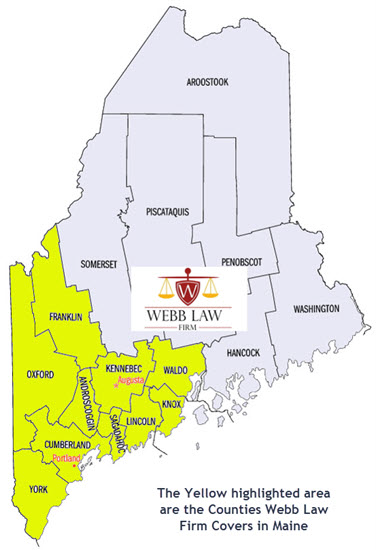
Webb Law Firm handles OUI defense across Maine. The firm takes administrative license suspension hearings, challenges breath testing and field sobriety testing, and builds defenses meant to protect your driving record. Every OUI case is different, and the result turns on the particular facts.
If you have been arrested for OUI in Maine, contact Webb Law Firm for a consultation. A conviction brings a license suspension, an SR-22 filing obligation, and years of higher insurance costs. Acting early puts you in the strongest position to protect your rights and your driving privileges.

Frequently Asked Questions About SR-22 Insurance in Maine
Here are answers to the questions drivers ask most about SR-22 filings in Maine.
How Much Does SR-22 Insurance Cost in Maine?
The filing fee is a one-time charge of about $15 to $25 from your insurer. The bigger cost is the jump in insurance premiums that comes with high-risk status after an OUI. Rates may climb by fifty to one hundred percent, and sometimes more, depending on the insurer, your driving record, and other factors. Comparing quotes from several carriers is the best way to find a better rate.
How Long Do I Need to Carry SR-22 Insurance in Maine After an OUI?
Maine law requires drivers to keep proof of financial responsibility on file for at least three years after the license comes back. The clock starts on that reinstatement date, not on the date of conviction. A gap in the coverage on file can bring another suspension, so continuous coverage matters.
Can I Get SR-22 Insurance in Maine if I Don't Own a Car?
Yes. A non-owner SR-22 policy covers drivers who own no vehicle but still owe an SR-22 filing. It satisfies Maine's financial responsibility requirements and usually costs less than a standard policy. It covers liability only. It is not full coverage, so it pays nothing for damage to the car you were driving.
What Happens if My SR-22 Insurance Lapses in Maine?
A certified policy cannot be canceled until notice of cancellation has been filed with the Secretary of State. If the coverage on file ends and your license is suspended, that suspension lasts until you give proof of financial responsibility again. Driving while you owe that proof, without it and without authorization from the Secretary of State, is a Class D crime. Paying premiums on time and planning the handover when you switch insurers prevents most lapses.
Does Every Maine OUI Conviction Require an SR-22?
Under Maine law, a driver with an OUI conviction within the 10-year period may not have a license reinstated until that driver meets the financial responsibility requirements. Where a prior OUI conviction falls within 10 years, the Secretary of State may not reinstate the license until proof is given. What applies in your case turns on your driving record and the circumstances of the offense. Ask an attorney or the Maine BMV to confirm it.