Maine State Bar
Justia Lawyer Rating
Super Lawyers
National College for DUI Defense
National Association of Criminal Defense Lawyers
Martindale-Hubbell
Avvo
MTLA
AV Preeminent

guns-300x225In yesterday’s paper there was an article about a shooting in Mt. Rainier National Park.  There was a tragedy in the park.  A young man, believed to be Benjamin Colton Barnes,  had severe mental problems – possibly PTSD from service in Iraq.  He shot several people near Seattle on New year’s Eve.  He may also have been involved in another shooting incident that night.  On New Year’s Day Barnes he fled to Mt. Rainier National Park.

Park police had a checkpoint set up to make sure people had chains because of the snowy conditions in the park.  Someone blew through that checkpoint.  One of the rangers followed that person.  Another ranger, Margaret Anderson, set up a roadblock to stop the person who ran the checkpoint.  As she was getting out of a vehicle she was shot and killed.  Police believe Barnes was the shooter.  Barnes was later found dead in the Park.  The cause of death is believed to be hypothermia – he was  found in a snowy stream in a T-shirt and jeans.

Before Barnes was found dead, rangers had rounded up all of the park visitors and evacuated them.  They were afraid for their safety.  Afraid that Barnes would try to kidnap or harm some of them.

by
Posted in:
Published on:
Updated:

Defense Attorney: John Scott Webb, Esq.

Offense: Gross Sexual Assault, Class A, 32 Counts; Unlawful Sexual Contact, Class C, 33 Counts

Maximum Sentence: 30 years with respect to each Class A Count; 5 Years with respect to each Class C Count; (a total of 1,125 years)

by
Posted in:
Published on:
Updated:

Defense Attorney: John Scott Webb, Esq.

Offense: Operating Under the Influence (OUI, DUI, DWI)

Maximum Sentence: 364 days in jail

by
Posted in:
Published on:
Updated:

Defense Attorney: John Scott Webb, Esq.

Offense: Operating Under the Influence (OUI, DUI, DWI)

Maximum Sentence: 364 days in jail

by
Posted in:
Published on:
Updated:

Defense Attorney: John Scott Webb, Esq.

Offense: Operating Under the Influence (OUI, DUI, DWI)

Maximum Sentence: 364 days in jail (minimum 90 day license suspension, $500.00 fine)

by
Posted in:
Published on:
Updated:

So what does the Supreme Court’s decision in Bullcoming v. New Mexico mean for the country at large? The answer is that no longer can scientific evidence be introduced into a case as if it were non-testimonial evidence. Testing and subsequent analysis of forensic evidence, far from being rote, requires a level of scientific expertise that, on occasion, may come into question. It is therefore imperative that whoever performs testing on any manner of sample must be made available for testimony so that the accuracy and reliability of the conclusions may be fully investigated. Although this doesn’t pose much of a problem for us here in Maine, many larger states may find themselves in a predicament now that highly technical and crucial forensic evidence can not be presented to the court as though it was generated by some nameless pencil-pusher.

by
Posted in:
Published on:
Updated:

canadian-flag-300x199Many people do not realize that a DUI or other misdemeanor conviction in the United States can bar you from entering Canada. Folks who head to Canada on vacation are sometimes turned away at the border because a member the family has a DUI conviction. People on business trips, or hunting and fishing trips face the same problem.
If you have a conviction for DUI, operating after license suspension, leaving the scene of an accident, dangerous driving or many other misdemeanor charges, you are “inadmissible” under Canadian immigration law. If that is your only criminal conviction in your life you are inadmissible for 10 years. After that you are deemed rehabilitated.

If you have two or more convictions you must apply for rehabilitation with the Canadian government. It is a pretty involved process that requires you to submit a lot of documents and a fee. Processing takes up to a year. You cannot apply for rehabilitation until five years after the last action flowing from the second conviction.

by
Posted in:
Published on:
Updated:

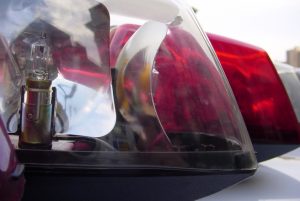
police It is always surprising that so many people are stopped by the police and arrested for DUI when the  reason they were stopped in the first place had nothing to do with DUI. I think more DUI arrests result from vehicle defects then from weaving.

The Fourth Amendment says that the police cannot stop you anytime they feel like it. They have to have a reason to stop you. The amount of evidence police must have to stop you depends on the situation. There are two levels of evidence that justify a stop. These are Reasonable and Articulable Suspicion, and Probable Cause.

Reasonable and Articulable Suspicion is the amount of evidence necessary to justify a belief that a person might be violating the law. That belief must be reasonable in the circumstances and based on evidence to support that reason. The officer must be able to articulate that reason as the reason for the stop.  Also the reason for the stop must be related to the subsequent investigation. This means that the officer cannot just invent a reason as a pretext. The police cannot stop you on a mere hunch.

by
Posted in:
Published on:
Updated:
Contact Information