 Southern Maine Criminal Lawyer Blog
What Is Reasonable Suspicion?

Reasonable suspicion is a legal standard that allows law enforcement to briefly stop and detain a person when specific, articulable facts suggest criminal activity may be occurring. It is not a hunch or a guess. Officers must point to concrete observations – behaviors, circumstances, or information – that would lead a reasonable person to suspect something unlawful is happening.
The U.S. Supreme Court established this standard in Terry v. Ohio, 392 U.S. 1 (1968). The Court held that officers may conduct a brief investigatory stop based on reasonable suspicion and objective facts. This type of encounter is often called a “Terry stop.”
Maine courts follow the federal Terry framework when evaluating whether an officer had reasonable suspicion for a stop. The standard sits below probable cause on the evidentiary spectrum. It is the minimum threshold an officer must clear before detaining someone, even briefly. If the officer cannot articulate specific facts that justified the stop, any evidence gathered during that encounter could be thrown out.
Understanding reasonable suspicion matters because it affects nearly every criminal defense case that begins with a traffic stop, a pedestrian encounter, or a street-level detention. Whether you face an OUI charge, a drug possession allegation, or another criminal matter, the legality of that initial stop often determines how your case unfolds.

What Reasonable Suspicion Does Not Require
Many people assume an officer needs strong evidence before pulling them over or stopping them on the street. The threshold is lower than most expect. Still, it has real limits.
Reasonable suspicion does not require proof that a crime has occurred. It does not require probable cause. It does not require certainty or a preponderance of evidence. Officers do not need to witness a completed crime before initiating a stop.
But reasonable suspicion cannot rest on a hunch, a gut feeling, or a vague sense that something seems off. Courts have consistently held that an officer’s intuition alone is not enough. The stop also cannot be based solely on a person’s race, ethnicity, or presence in a particular neighborhood. These factors, standing alone, fail the Terry standard.
The key distinction is between subjective suspicion and objective, articulable facts. An officer who says “I just had a feeling” has not met the standard. An officer who says “I observed the vehicle cross the center line twice in 200 yards” has articulated a specific fact that courts may accept. Maine courts evaluate each case individually. Officers must be able to explain – with particularity – what facts supported the decision to stop.

Reasonable Suspicion vs. Probable Cause
These two standards are related but different. Confusing them can change how you understand your rights.
Reasonable suspicion is a lower bar. It justifies a brief investigatory stop – a Terry stop – where the officer may ask questions and make limited observations. Officers need specific facts suggesting criminal activity may be occurring.
Probable cause is a higher standard. Officers need probable cause to make an arrest, obtain a search warrant, or conduct a full search of your vehicle or person. Probable cause means enough evidence exists to lead a reasonable person to believe a crime was committed.
A practical analogy helps clarify the difference. Reasonable suspicion is like noticing something seems wrong – a car weaving between lanes late at night. Probable cause is having enough evidence to believe a specific crime occurred. The officer approaches the window, smells alcohol, the driver slurs words, and field sobriety tests indicate impairment.
This progression matters in real cases. A stop that begins with reasonable suspicion can escalate to probable cause based on what the officer observes after the initial detention. During a routine traffic stop, an officer might notice drug paraphernalia in plain view or detect the odor of marijuana. Those new observations could establish probable cause for an arrest or a more thorough search.
Common Examples of Reasonable Suspicion in Maine
Maine courts evaluate reasonable suspicion by looking at the totality of the circumstances. No single factor is automatically enough or automatically insufficient. Here are common scenarios that may support reasonable suspicion:
- Erratic driving patterns – Swerving across lane markings, drifting onto the shoulder, or making unusually wide turns. These observations frequently lead to OUI stops in Maine.
- Matching a suspect description – An officer receives a dispatch report describing a specific person or vehicle near a reported crime scene, and the individual matches that description.
- Observed hand-to-hand exchange – An officer witnesses what appears to be a drug transaction in an area with documented narcotics activity.
- Equipment violations combined with other factors – A broken taillight alone may justify a stop for the equipment violation itself. When combined with nervous behavior or other suspicious circumstances, it may also support reasonable suspicion of criminal activity.
Equally important is understanding what does not constitute reasonable suspicion:
- Simply being present in a neighborhood with higher crime rates
- Driving late at night without any traffic violations or erratic behavior
- A person’s race, ethnicity, or appearance
- An anonymous tip with no corroborating details
Consider a hypothetical: a client is pulled over at 1:00 a.m. solely because the officer thought they were “driving slowly.” The officer observed no traffic violations, no equipment problems, and no erratic behavior. In our experience defending clients in Maine criminal cases, a stop based on nothing more than slow driving at night often lacks the articulable facts the Terry standard demands. We would evaluate whether that stop could be challenged through a suppression motion.

How Reasonable Suspicion Affects Your Criminal Case
The legality of the initial stop is often the most important issue in a criminal case. If police lacked reasonable suspicion, a defense attorney can file a motion to suppress the evidence obtained as a result of that stop.
The Fourth Amendment protects against unreasonable searches and seizures. Article I, Section 5 of the Maine Constitution provides similar – and in some cases broader – protections. Together, these provisions mean that evidence gathered during an unlawful stop may be inadmissible in court.
Suppression of key evidence can change the entire trajectory of a case. Breathalyzer results from an OUI stop, drugs found during a search, or statements made during a detention may all be excluded if the initial stop was unconstitutional. Without that evidence, prosecutors may have no choice but to reduce charges or dismiss the case entirely.
In our experience representing clients who were stopped without valid reasonable suspicion, filing a motion to suppress has been instrumental in securing favorable outcomes. Challenging the basis for the initial stop is one of the most effective defense strategies when officers lacked articulable facts. The suppression hearing process under Maine Rules of Criminal Procedure gives the defense an opportunity to cross-examine the stopping officer and expose weaknesses in the state’s justification. Courts must find guilt beyond all reasonable doubt, and a successful suppression motion can make that standard impossible for the prosecution to meet.
Every case is different. Courts weigh the facts individually. But when the stop itself was unlawful, the evidence that flows from it may fall with it.
Talk to a Maine Criminal Defense Attorney About Your Case
If you believe police stopped you without reasonable suspicion, the evidence in your case could be vulnerable to a suppression challenge. But these motions must be raised early in the case timeline. Waiting too long may limit your options.
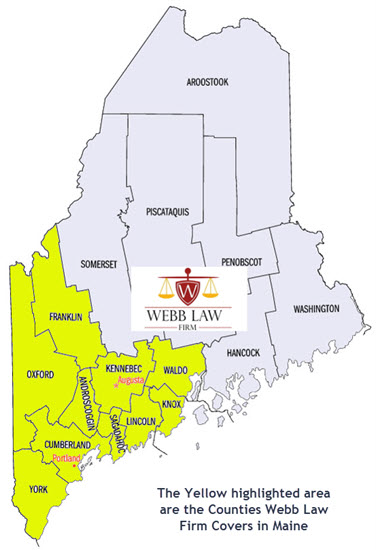
Webb Law Firm handles criminal defense cases throughout Maine, including OUI charges, drug crimes, and other matters where the legality of the initial stop is a central issue. Our Belfast Maine attorneys and lawyers in other communities have experience challenging Terry stops in Maine district and superior courts. We understand what facts officers must articulate and where their justifications often fall short.
A free consultation can help you understand whether a motion to suppress may be viable in your case. Contact Webb Law Firm today to discuss the circumstances of your stop and learn what defense strategies may apply to your situation.

Frequently Asked Questions About Reasonable Suspicion
Can police pull you over without reasonable suspicion?
Officers generally need at least reasonable suspicion of a traffic violation or criminal activity before initiating a stop. However, narrow exceptions exist, such as sobriety checkpoints that follow specific legal requirements. If an officer stopped you without any articulable reason, the stop may be unconstitutional. An attorney could challenge it through a suppression motion.
What happens if an officer did not have reasonable suspicion for a stop?
A defense attorney can file a motion to suppress the evidence gathered during and after the stop. If the court agrees that the officer lacked reasonable suspicion, evidence such as breath test results, drug seizures, or incriminating statements may be excluded. This could lead to reduced charges or a full dismissal, depending on the circumstances.
Is reasonable suspicion the same as probable cause?
No, reasonable suspicion and probable cause are distinct standards. Reasonable suspicion is a lower standard that justifies a brief investigatory stop. Probable cause is a higher standard required for arrests and search warrants. Reasonable suspicion means specific facts suggest criminal activity may be occurring. Probable cause means enough evidence exists to believe a crime was committed.
Can an anonymous tip create reasonable suspicion?
An anonymous tip alone generally does not create reasonable suspicion. Courts typically require officers to corroborate details from the tip through their own observations before the tip can support a stop. If the officer cannot independently verify any facts from the tip, courts may find the stop lacked a sufficient basis.
How do I challenge a traffic stop in Maine?
Your attorney would file a motion to suppress evidence under Maine Rules of Criminal Procedure, arguing the officer lacked reasonable suspicion for the stop. The court then holds a suppression hearing where the officer must testify about the specific facts that justified the detention. If the court finds those facts insufficient, the evidence from the stop could be suppressed.