 Southern Maine Criminal Lawyer Blog
What Is an Ignition Interlock Device?

An ignition interlock device (IID) is a breathalyzer wired into your vehicle’s ignition system. It prevents the engine from starting if it detects alcohol on your breath. Maine requires these devices under certain OUI convictions to keep impaired drivers off the road.
The device works as follows. Before you start your car, you blow into a small handheld unit mounted near the dashboard. If your breath sample registers a blood alcohol concentration (BAC) above the preset limit – typically 0.05% – the engine will not start. Once you are driving, the device requires rolling retests at random intervals. You must pull over safely and provide another breath sample within a few minutes.
The device logs every event. It records each breath test result, any failed attempts, missed retests, and signs of tampering. This data is stored in the device and downloaded during regular calibration appointments. Maine governs interlock requirements under statute, which spells out when installation is mandatory and what happens if you violate the program rules.
When Maine Requires an Interlock Device
Maine law triggers mandatory IID installation in several OUI-related situations. The Maine Secretary of State’s Bureau of Motor Vehicles issues the interlock order. Courts can also impose IID as a condition of probation. The specific requirements depend on the number of prior offenses and aggravating factors in your case.
The most common scenarios that require an interlock device include:
- First-offense OUI with a BAC of 0.15% or higher
- First-offense OUI involving a test refusal
- Second and subsequent OUI convictions
- OUI with aggravating factors such as a minor in the vehicle
- License reinstatement after an OUI-related suspension
- Reinstatement for habitual offender status
First-Offense OUI Interlock Requirements
Not every first OUI in Maine requires an interlock device. The requirement typically kicks in when aggravating factors are present. A BAC of 0.15% or higher – nearly twice the legal limit – is the most common trigger.
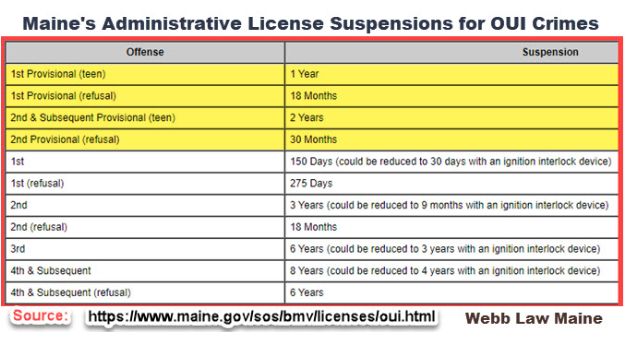
For first offenders with aggravating factors, the IID period is usually a minimum of 150 days. Some first-time offenders may apply for early license reinstatement through the Secretary of State’s office with an IID installed. This option allows you to drive during the suspension, but only in a vehicle equipped with an interlock device.
Refusing a chemical test during an OUI stop can trigger interlock requirements. These requirements are part of the reinstatement process after an administrative license suspension.
Repeat OUI Interlock Requirements
The stakes increase sharply for repeat offenders. A second OUI conviction in Maine typically requires an IID for at least one year. Third and subsequent offenses carry even longer mandatory interlock periods.
For repeat offenders, judges have no discretion to waive the interlock requirement. The device is mandatory. In our experience representing OUI clients in Maine courts, many people are surprised to learn that the interlock period does not begin until the device is actually installed. It does not begin from the date of conviction or sentencing.
Drivers seeking reinstatement after a habitual offender revocation also face mandatory IID installation. These cases often involve the longest interlock periods. The underlying driving record shows a pattern of serious traffic offenses.

How the Interlock Program Works in Maine
The interlock process in Maine follows a set series of steps. Understanding each stage helps you avoid delays and extra costs.
Step 1: Receive the interlock order. The Secretary of State’s Bureau of Motor Vehicles issues a formal order requiring IID installation. This order specifies the duration and conditions of the interlock period.
Step 2: Choose an approved provider. Maine maintains a list of state-approved IID vendors. You must select a provider from this list. The Secretary of State’s office can direct you to current approved vendors.
Step 3: Schedule installation. The provider installs the device in your vehicle. Installation typically takes one to two hours. You will receive training on how to use the device properly.
Step 4: Calibration and maintenance. You must bring your vehicle to the provider for calibration and data download every 30 to 60 days. During these appointments, the technician checks the device and recalibrates the sensor. The technician also downloads the event log for reporting to the state.
Step 5: Data reporting. Your provider sends calibration data and violation reports to the Secretary of State. This data determines whether you are complying with the program.
Step 6: Removal. Once your IID period ends and you have no outstanding violations, you schedule a removal appointment with your provider. The Secretary of State must authorize removal before the provider can take the device out.
Expect to pay between $70 and $150 for installation. Monthly lease and calibration fees typically run $60 to $90. Over a one-year interlock period, total costs can reach $900 to $1,200 or more. These costs are your responsibility – the state does not subsidize the program.

What Happens If You Violate Interlock Rules
Interlock violations carry serious consequences in Maine. The device records everything. The data goes straight to the Secretary of State during calibration appointments.
Common violations include:
- Failed breath tests – blowing above the preset BAC limit
- Missed rolling retests – failing to provide a retest sample while driving
- Missed calibration appointments – not bringing the vehicle in on schedule
- Tampering or circumvention – attempting to disable, disconnect, or bypass the device
- Driving a non-IID vehicle – operating any vehicle that does not have the interlock installed
In our experience, many people are surprised to learn that interlock requirements can be extended for missed calibration appointments alone. A single missed appointment can add months to your IID period.
More serious violations trigger harsher penalties. Tampering with an IID is a criminal offense. Violations can result in extended interlock periods, additional license suspension, and new criminal charges. The Secretary of State reviews violation data and has authority to extend the IID requirement or revoke your conditional license.

Can You Drive Without an Interlock If Required?
No. If you are under an interlock order and drive any vehicle without an IID installed, you commit a Class E crime in Maine. A Class E crime carries up to six months in jail and a fine of up to $1,000.
Maine provides no general hardship exemption from interlock requirements. You cannot argue that the cost is too high or that the device is inconvenient.
One limited exception applies to employer-owned vehicles. In certain circumstances, you may drive an employer’s vehicle without an IID if the employer provides a signed affidavit. The affidavit must acknowledge your interlock restriction. This exception applies only during the course of employment and only when the employer owns the vehicle. It does not apply to self-employment situations.
Another detail that catches people off guard: if you own or have access to multiple vehicles in your household, the Secretary of State may require an IID on each vehicle. Penalties may vary depending on the circumstances of your case. Consult with an attorney about your specific situation before assuming any exceptions apply.
Talk to a Maine OUI Defense Lawyer About Your Case
Interlock requirements affect your daily life, your finances, and your driving record for months or even years. The decisions you make early in your OUI case – especially before accepting a plea – can determine how long you carry an IID. These decisions also determine whether alternatives are available.
Webb Law Firm handles OUI cases throughout Maine in both district and superior courts. We understand how interlock requirements interact with SR22 insurance, license reinstatement, probation conditions, and the Secretary of State’s administrative process. An experienced attorney may be able to challenge the underlying OUI charge. An attorney may also negotiate for the shortest possible IID period or help you navigate the reinstatement process more efficiently.
If you are facing an OUI charge or already dealing with interlock requirements, schedule a consultation to discuss your specific situation. Getting legal guidance before you accept plea conditions that include mandatory IID installation can make a significant difference in the outcome of your case.

Frequently Asked Questions About Maine Interlock Laws
How long do you need an ignition interlock device after an OUI in Maine?
The duration depends on your offense. First-time OUI offenders with aggravating factors – such as a BAC of 0.15% or higher – typically face a minimum of 150 days. Second offenses require at least one year. Third and subsequent offenses carry longer mandatory periods. Violations during the IID period – such as failed tests or missed calibration – can extend these timelines.
How much does an ignition interlock device cost in Maine?
Expect to pay $70 to $150 for installation and $60 to $90 per month for the device lease and calibration service. Over a 12-month interlock period, total costs typically range from $900 to $1,200. You may also pay removal fees. All costs are your responsibility.
Can you get an interlock requirement removed early in Maine?
Generally, Maine law sets minimum IID periods, and the Secretary of State must authorize removal. Courts have limited discretion to shorten a mandatory interlock period. However, an attorney may be able to help you avoid or minimize IID requirements during the plea negotiation stage before conditions are set.
What happens if you fail a breath test on your interlock device?
The device prevents your car from starting, and the failed test is logged. Repeated failures are reported to the Secretary of State during your next calibration appointment. Multiple failed tests can result in an extended IID period or additional license suspension. You typically get a brief lockout period before you can retest.
Do you need an interlock device for a first OUI in Maine?
Not always. A standard first-offense OUI without aggravating factors may not trigger a mandatory IID requirement. However, if your BAC was 0.15% or higher, you refused chemical testing, or other aggravating factors were present, interlock installation is typically required. Courts may also order an IID as a condition of probation for any OUI conviction.