 Southern Maine Criminal Lawyer Blog
Maine Felony OUI: Charges, Penalties, and Defense Options
Most OUI charges in Maine are Class D misdemeanors. But an OUI becomes a felony – a Class C or Class B crime – when you have three or more prior OUI convictions within 10 years, when the OUI results in serious bodily injury, or when the OUI causes death. Many people ask, is an OUI a felony? It depends entirely on your record and the circumstances of your case.
Understanding when an OUI crosses from misdemeanor to felony is critical. The penalties escalate dramatically. A first-offense misdemeanor OUI may carry a $500 fine and license suspension. A felony OUI can mean years in state prison and a permanent criminal record. This article explains the felony thresholds, penalties, and defense options under Maine law.
How Maine OUI Penalties Escalate Toward Felony Territory
Fighting an OUI charge requires understanding Maine’s complex penalty tiers. Penalties grow harsher with each offense. The jump from misdemeanor to felony carries life-changing consequences.
First-offense OUI (Class D misdemeanor):
- Minimum $500 fine (up to $2,000)
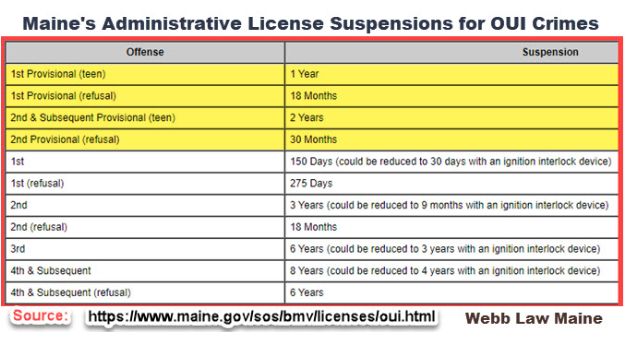
- 150-day license suspension
- Up to 364 days in jail
- Minimum 96 hours in jail if you refused chemical testing
- Minimum 48 hours in jail if your BAC was .15 or higher
Second-offense OUI within 10 years (Class D misdemeanor):
- Minimum $700 fine (up to $2,000)
- Minimum 7 days in jail
- 3-year license revocation
- Mandatory ignition interlock device upon reinstatement
Third-offense OUI within 10 years (Class C felony):
- Minimum 30 days in jail (up to 5 years in prison)
- Fines up to $5,000
- 6-year license revocation
- Permanent felony criminal record
The escalation is steep. Two misdemeanor OUIs set the stage for a felony on the third arrest. Every prior conviction within the 10-year lookback window pushes you closer to that threshold.
Refusing a chemical test adds another layer of consequences. Under Maine’s implied consent law, refusing a breath or blood test triggers a separate 275-day license suspension. This runs through the Bureau of Motor Vehicles. It applies even before your criminal case reaches court.
The key to potentially beating an OUI charge lies in challenging evidence. This includes field sobriety tests, breathalyzer results, and the legality of the traffic stop. An experienced attorney can identify procedural errors, equipment malfunctions, or constitutional violations. These could lead to evidence suppression or case dismissal.
What Happens if You Get an OUI?
When you get an OUI, an OUI occurs when operating any motor vehicle while having a blood alcohol content of 0.08% or higher. It also occurs when being under the influence of drugs or impaired by a combination of alcohol and drugs. The process involves both criminal court proceedings and administrative action by the Bureau of Motor Vehicles (BMV). You will face an automatic license suspension before conviction, unless you request a hearing within 10 days of arrest.
When Is an OUI a Felony in Maine?
For most people arrested on a first or second offense, an OUI is not a felony. Standard first-offense and second-offense OUIs are Class D misdemeanors. But specific circumstances push the charge into felony territory.
Three or more OUI convictions within 10 years. This is the most common path to a felony OUI. When a driver has two or more prior OUI convictions within Maine’s 10-year lookback period, the third offense becomes a Class C crime. A recent client came to our firm after being arrested for OUI with two prior convictions from 2018 and 2021. Both fell within the 10-year lookback window. Prosecutors charged the offense as a Class C felony carrying up to 5 years in prison.
OUI causing serious bodily injury. When an OUI-related crash causes serious bodily injury, the charge elevates to a Class C crime. This applies regardless of the driver’s prior record. Prosecutors must prove that the driver’s impairment caused the injuries, not just that an accident happened while the driver was impaired.
OUI causing death. The most severe classification applies when an OUI results in another person’s death. This is a Class B crime – aggravated OUI manslaughter – carrying up to 10 years in prison.
Prior felony OUI conviction. If you already have a felony OUI on your record, any new OUI charge triggers enhanced sentencing. The court treats subsequent offenses more severely.
An important detail many people miss involves out-of-state convictions. Out-of-state DUI, DWI, or OUI convictions count toward Maine’s lookback total. If you were convicted of drunk driving in New Hampshire in 2019 and Massachusetts in 2022, a Maine OUI arrest in 2026 could be charged as your third offense – a Class C felony. Maine counts convictions from any jurisdiction where the underlying conduct would qualify as an OUI under Maine law.
OUI convictions remain on your criminal record permanently in Maine. No expungement option exists. This makes it crucial to fight the charges from the beginning.

Can You Get Out of an OUI in Maine?
A Maine OUI plea bargain may be possible, especially for first-time offenders. Common plea options include reducing charges to “driving to endanger” or agreeing to complete alcohol education programs. Other options include installing an ignition interlock device or accepting community service requirements. Success in fighting an OUI charge often depends on several factors. These include maintaining a clean prior record, having borderline BAC results, identifying procedural errors in testing, demonstrating cooperation with law enforcement, and presenting strong constitutional challenges.
Fighting an OUI charge in Maine requires quick action and experienced legal representation. The consequences of a conviction can impact your life for years. They affect employment, insurance rates, and personal freedom. Contact OUI defense attorney John Webb today to discuss your options. Call for a free confidential consultation to protect your rights.
Defense Strategies
A criminal defense attorney can examine every aspect of your case to build a strong defense. This includes challenging chemical test administration and accuracy. It also involves reviewing field sobriety test procedures, questioning police officer testimony, and identifying potential Fourth Amendment violations. These violations could exclude evidence from court.
Act quickly to protect your driving privileges by requesting a BMV Suspension Hearing within 10 days of the notice date. At this hearing, your attorney can challenge the evidence. This may prevent an automatic 150-day license suspension.

Defenses Specific to Felony OUI Charges
One of the most effective strategies for third-offense OUI cases involves challenging the validity of prior convictions. If a prior OUI plea was not entered knowingly and voluntarily – for example, if the defendant lacked counsel or was not properly advised of their rights – that conviction may not count. The felony enhancement could fall apart.
Out-of-state convictions must meet specific criteria to qualify under Maine law. Your attorney can review whether each prior conviction occurred in a jurisdiction whose statute aligns with Maine’s OUI definition. If a prior conviction does not qualify, the felony enhancement may fail.
In felony OUI-injury cases, the prosecution must prove both impairment and causation. Challenging the state’s evidence of “serious bodily injury” or showing that injuries resulted from other factors – not the driver’s impairment – can weaken the felony charge.
Plea Negotiation for Felony OUI
In some cases, a felony OUI can be negotiated down to a misdemeanor. This may happen when prior conviction records are disputed, procedural errors occurred during arrest, or the evidence of impairment is borderline. A skilled attorney may convince prosecutors to reduce the charge rather than risk losing at trial.
Potential Outcomes
For first-time offenders, it may be possible to reduce an OUI to a lesser charge like driving to endanger. This typically results in a shorter license suspension of 30 days and a fine below $1,000. No jail time applies for first-time offenders.
After resolution, you may qualify for license reinstatement after 30 days. You could drive with restrictions for 120 days by installing an ignition interlock device.
Consequences Without Defense
Without proper legal representation, a first-offense OUI conviction in Maine carries serious penalties. The court can impose up to 364 days in jail and fines up to $2,000. You will face a mandatory minimum 150-day license suspension, which could extend up to 14 months. The minimum fine starts at $500.
The stakes of a felony conviction make early attorney involvement critical. The 10-day BMV hearing window is just the start. Every day that passes without legal counsel is a day lost for building your defense.
Felony OUI Penalties in Maine
Felony OUI convictions carry penalties far beyond what misdemeanor offenders face. Understanding these consequences helps explain why fighting a felony charge is so important.
Class C felony OUI (third offense within 10 years or OUI causing serious bodily injury):
- Up to 5 years in prison
- Mandatory minimum 30 days in jail for a third offense
- Fines up to $5,000
- 6-year license revocation
- Mandatory ignition interlock device upon reinstatement
Class B felony OUI (death resulting):
- Up to 10 years in state prison
- Fines up to $20,000
- Extended license revocation
- Potential additional charges including manslaughter
Collateral Consequences of a Felony OUI
Court-imposed penalties are only part of the picture. A felony OUI conviction triggers collateral consequences that follow you for life.
As a convicted felon, you lose your right to possess firearms under both Maine and federal law. Many employers run background checks. A felony conviction can disqualify you from jobs in healthcare, education, transportation, and government. Professional licenses – including nursing, teaching, and commercial driving – may be revoked or denied.
Housing applications often ask about felony convictions. Landlords can legally deny rental applications based on criminal history. Car insurance rates spike dramatically after a felony OUI.
Felony OUI convictions cannot be expunged in Maine. This is permanent. There is no waiting period, no petition process, and no second chance to clear your record. Every case is different, but the permanence of a felony record makes aggressive defense essential from day one.

Talk to a Maine OUI Defense Lawyer Today
A felony OUI conviction carries life-altering consequences. You could face years in prison, a permanent criminal record, and the loss of fundamental rights. Early legal intervention is the best way to protect your future.
Webb Law Firm has experience defending OUI cases in Maine courts. We handle first-offense misdemeanors to felony charges involving prior convictions or serious injuries. We understand how local prosecutors build these cases and how to challenge them effectively.
If you or someone you love faces a felony OUI charge, contact Webb Law Firm before your BMV hearing deadline passes. That 10-day window matters. The sooner we review your case, the stronger your defense can be.

Frequently Asked Questions
Is a first-offense OUI a felony in Maine?
A first-offense OUI in Maine is a Class D misdemeanor, not a felony. It carries penalties including a minimum $500 fine and a 150-day license suspension. Penalties may include jail time if you refused a chemical test or had a BAC of .15 or higher.
How many OUI convictions make it a felony in Maine?
Three OUI convictions within a 10-year lookback period make the third offense a Class C felony. The first two offenses are Class D misdemeanors. The third triggers felony status with up to 5 years in prison and a mandatory minimum 30-day jail sentence.
Can a felony OUI be expunged in Maine?
Maine does not allow expungement of OUI convictions, whether misdemeanor or felony. A felony OUI stays on your criminal record permanently. This is one reason why fighting the charge at trial or through plea negotiation is so important.
Do out-of-state DUI convictions count toward a felony OUI in Maine?
Yes. Maine counts DUI, DWI, and OUI convictions from other states toward the 10-year lookback period. If the underlying conduct would qualify as an OUI under Maine law, the out-of-state conviction counts. Your attorney can challenge whether specific out-of-state convictions meet Maine’s criteria.
What is the jail time for a felony OUI in Maine?
A Class C felony OUI (third offense within 10 years) carries a mandatory minimum of 30 days in jail and a maximum of 5 years in state prison. A Class B felony OUI involving a death carries up to 10 years in prison. Actual sentences depend on the circumstances of your case and your criminal history.