Maine State Bar
Justia Lawyer Rating
Super Lawyers
National College for DUI Defense
National Association of Criminal Defense Lawyers
Martindale-Hubbell
Avvo
MTLA
AV Preeminent

What Is a Grand Jury Subpoena?

All four Webb Law Firm lawyers posing outdoors against greenery.

A grand jury subpoena is a court order. It tells a person to appear before a grand jury or hand over records. The order goes out as part of a criminal investigation. A trial subpoena calls a witness to testify at a hearing or trial after charges are filed. A grand jury subpoena works differently. It comes earlier, while the case is still being built, before any indictment.

A grand jury subpoena tells you that a prosecutor believes you have facts or records relevant to an open criminal case.

The grand jury subpoena definition covers two main types. A subpoena ad testificandum tells a person to appear and give sworn testimony. A subpoena duces tecum calls for records, emails, or other physical evidence. One subpoena can demand both at once.

In federal cases, prosecutors issue these subpoenas under the Federal Rules of Criminal Procedure. They act on behalf of the grand jury. In Maine state practice, prosecutors use the state's rules of criminal procedure to compel evidence before a grand jury. In Maine, the Attorney General, district attorney, or grand jury foreperson swears in witnesses before they testify.

The duty is the same whether the subpoena is federal or state. You must comply or face serious trouble.

Why You Might Receive a Grand Jury Subpoena

Prosecutors sort subpoena recipients into three informal groups. A "target" is someone the prosecutor believes committed the crime under investigation. A "subject" is someone whose conduct falls within the scope of the case. A "witness" is someone believed to have useful facts but who is not personally under investigation.

These subpoenas often come out of white-collar fraud, drug conspiracy, health care fraud, and public corruption cases.

Receiving a subpoena does not mean you are charged with a crime. Your status – target, subject, or witness – shapes the whole legal strategy. A witness may cooperate freely. A target may need to assert rights under the Constitution. Defense lawyers often ask the prosecutor in writing to clarify a client's status. This request should be made through counsel, not on your own.

Your status can also shift as the case develops. Someone who starts as a witness may become a subject or target based on new evidence. This is one reason consulting a criminal defense attorney early matters so much.

What a Grand Jury Subpoena Can Require

A subpoena for grand jury testimony is called a subpoena ad testificandum. It tells you to appear and answer questions under oath. The setting is nothing like a trial. No judge sits in the grand jury room during questioning. The prosecutor asks the questions. The grand jurors may also ask their own. Your lawyer cannot be inside the room. But you may step outside to talk with your lawyer before you answer any question.

A grand jury subpoena duces tecum calls for documents, records, or physical evidence. Prosecutors can ask for a wide range of material. These include bank records, emails, phone records, business files, tax returns, and electronic data. The list they ask for is often long.

Sometimes a prosecutor will agree to take the records instead of your appearance in person. That often happens when the person is a records custodian rather than a fact witness. Whether that option is open depends on the prosecutor's needs and the shape of the case.

The duty to comply is real. Under Maine law, a person subpoenaed as a witness for the State who fails to appear without reasonable cause is guilty of a Class E crime, unless punished for contempt instead.

Federal Grand Jury Subpoena Limits and Your Rights

Federal grand jury subpoenas have limits. Knowing those limits helps you and your lawyer plan a response.

A subpoena must seek facts relevant to the grand jury's inquiry. It cannot be used to harass a witness or impose an unreasonable burden. You may file a motion to quash or modify a subpoena that is unreasonable or oppressive. Courts weigh whether the subpoena is too broad, seeks privileged material, or imposes undue hardship.

The Fifth Amendment privilege against self-incrimination applies in the grand jury room. A witness may assert it question by question. For document subpoenas, the "act of production" doctrine may provide protection in some cases. You may resist if handing over the records would itself be incriminating. Handing them over can confirm that the records exist, or that you control them.
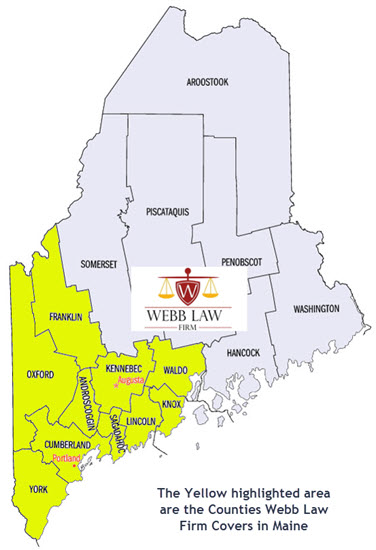
Map of southern Maine highlighting ten counties where Webb Law Firm provides criminal defense coverage.

Other recognized privileges may also apply. Attorney-client privilege protects confidential communications between a lawyer and client made for the purpose of legal advice. Spousal privilege may protect certain marital communications. Under Maine law, the spouse of the accused is a competent witness at a criminal trial, except in regard to marital communications.

When a witness invokes the Fifth Amendment, prosecutors may offer immunity to compel testimony. Federal use immunity bars the government from using compelled testimony – or information derived from it – against the witness in any criminal case. The exceptions are a prosecution for perjury, a false statement, or a failure to comply with the order. Maine has a similar immunity mechanism under the compelled testimony statute. There, the State must ask the court in writing, with the written approval of the Attorney General or the district attorney, and the court orders the witness to answer after notice and a hearing. A witness who then complies may not be prosecuted or penalized over any matter covered by those answers. Perjury, false swearing and contempt remain punishable, and refusing to answer after the order is itself contempt of court.

The Fourth Amendment generally does not require a warrant for documents obtained by subpoena. But an overbroad or oppressive subpoena can still be challenged by a motion to quash.

How to Respond to a Grand Jury Subpoena

If you receive a grand jury subpoena, take these steps right away.

Do not ignore it. A failure to appear can result in a contempt finding. In Maine, a witness subpoenaed for the State who fails to appear without reasonable cause is guilty of a Class E crime if not punished for contempt.

Do not destroy or alter any documents. Destroying evidence after receiving a subpoena can lead to federal obstruction charges or, in Maine, a charge of falsifying physical evidence. These charges can be more serious than the original case.

Note the details. Write down the date, the place, the name of the prosecutor who issued it, and what it demands – testimony, records, or both.

Contact a criminal defense attorney immediately. Do this before the appearance date. Early legal help can shape your whole role in the case.

Do not discuss the subpoena with co-workers, friends, or anyone connected to the investigation. Grand jury proceedings are conducted in secrecy under federal and state rules. Talking about it with other possible witnesses could create problems.

An experienced defense lawyer often calls the prosecutor to pin down your status and the scope of the case. Counsel may bargain for a narrower records request. Your lawyer can also file a motion to quash or modify an overbroad subpoena. Your lawyer will prep you for testimony and go with you to the courthouse. They cannot enter the grand jury room, so they wait just outside. That lets you step out for advice before you answer a hard question.

Speak With a Maine Criminal Defense Attorney About Your Grand Jury Subpoena

Grand jury subpoenas carry fixed appearance dates and hard deadlines. Waiting to act could limit your options. A grand jury subpoena attorney can look at your situation and clarify where you stand in the case. Legal counsel will help you respond in a way that protects your rights.

Webb Law Firm handles criminal defense matters in both the U.S. District Court for the District of Maine and Maine superior courts. Every grand jury matter turns on its own facts, and outcomes vary. Acting early can be the difference between a narrow records request and broader personal risk.

If you have received a federal or state grand jury subpoena in Maine, contact Webb Law Firm for a confidential consultation.

Webb Law Firm contact banner: need legal help, call 207-283-6400 for a free initial consultation, 24 hours.

Frequently Asked Questions About Grand Jury Subpoenas

What Is the Difference Between a Grand Jury Subpoena and a Regular Subpoena?

A grand jury subpoena compels testimony or records during a criminal investigation, before charges are filed. A regular subpoena – sometimes called a trial subpoena – compels attendance at a hearing or trial after charges exist. The grand jury version works in secret, and each kind follows different court rules.

Can I Bring My Lawyer Into the Grand Jury Room?

No. In both federal and Maine state practice, lawyers are not allowed inside the grand jury room while a witness testifies. But your lawyer may wait outside the room. You have the right to step out and talk with your lawyer before you answer any question.

What Happens if I Ignore a Grand Jury Subpoena?

Ignoring a grand jury subpoena can result in a contempt of court finding. In Maine, a witness subpoenaed for the State who fails to appear without reasonable cause is guilty of a Class E crime if not punished for contempt. Federal courts may also hold a non-compliant witness in contempt, which can include fines or jail time.

Can I Plead the Fifth in Response to a Grand Jury Subpoena?

Yes. The Fifth Amendment privilege against self-incrimination applies in grand jury proceedings. A witness may invoke the privilege on a question-by-question basis. However, you cannot simply refuse to appear. You must show up and assert the privilege as each question is asked. If the prosecutor offers immunity, you may be compelled to answer.

Does Receiving a Grand Jury Subpoena Mean I'm Being Charged With a Crime?

No. A grand jury subpoena means a prosecutor believes you have facts relevant to a case. Many recipients are witnesses, not targets. But your status could change as the case develops. Talking to a lawyer early helps you understand where you stand and how to protect your rights.

What Is a Misdemeanor?

All four Webb Law Firm lawyers posing outdoors against greenery.

A misdemeanor is a criminal offense less serious than a felony. Penalties generally include up to one year in jail, fines, probation, or a combination of these penalties. Most states treat misdemeanors as the lower tier of criminal conduct. They create a criminal record but are not as severe as felonies like armed robbery or murder.

Many U.S. states divide misdemeanors into classes or degrees based on severity. Some use Class A, B, and C. Others use first-degree, second-degree, and third-degree. Class A (or first-degree) is usually the most serious misdemeanor. Lower classes carry lighter penalties.

Misdemeanors differ from felonies in several important ways. Penalty exposure is lower. Procedural handling is often simpler – many misdemeanor cases stay in lower-level courts. But the collateral consequences can still be severe. A misdemeanor conviction appears on background checks. It can affect employment, housing applications, professional licensing, and more.

Maine's criminal code does not grade crimes as misdemeanors or felonies. The next section explains why that matters if you were charged in Maine.

Common Examples of Misdemeanors

Across the United States, these offenses commonly fall into the misdemeanor category. The specific classification varies by state. The following examples show the types of conduct involved.

Theft and Property Offenses

  • Shoplifting or petty theft – Taking merchandise or property below a certain dollar threshold. Most states treat lower-value theft as a misdemeanor.
  • Criminal mischief – Intentionally damaging someone else's property, such as vandalism or graffiti.
  • Trespassing – Entering or remaining on property without permission from the owner.

Alcohol and Drug Offenses

  • Simple drug possession – Possessing small amounts of marijuana or drug paraphernalia for personal use.
  • Public intoxication – Being visibly intoxicated in a public place to the point of causing a disturbance.
  • Minor in possession – An underage person possessing or consuming alcohol.
  • First-offense impaired driving – Operating a vehicle under the influence of alcohol or drugs. Many states classify a first offense as a misdemeanor.

Traffic-Related Offenses

  • Reckless driving – Operating a vehicle with willful disregard for safety.
  • Driving on a suspended license – Operating a vehicle after the state has suspended driving privileges.
  • Leaving the scene of a minor accident – Failing to stop and exchange information after a low-severity collision.

Assault and Personal Offenses

  • Simple assault – Intentionally causing minor bodily harm or threatening imminent harm to another person.
  • Disorderly conduct – Engaging in fighting, unreasonable noise, or other disruptive behavior in public.
  • Harassment – Repeated unwanted contact or communication intended to alarm or annoy.

Other Common Examples

  • Resisting arrest – Physically obstructing or interfering with a lawful arrest.
  • Prostitution – Engaging in or soliciting sexual conduct for payment.
  • Indecent exposure – Intentionally exposing oneself in a public setting.
  • Carrying a concealed weapon without a permit – Possessing a hidden firearm or weapon without the required license.

What About "Class a Misdemeanor" Examples?

Many people search for examples of class A misdemeanor offenses after receiving a charge in a state that uses that classification. In states like Texas, New York, and Illinois, "Class A" is the most serious misdemeanor tier under those states' own statutes. The maximum jail term for that tier is set by each of those states' statutes, not by any national rule.

Which offenses sit in that tier is defined by each of those states' own statutes. The same conduct can be graded differently from one state to the next. Evidence rules, such as those governing hearsay examples, also differ across jurisdictions.

These labels are not universal. Different states use entirely different classification systems. Some states use "gross misdemeanor" or "high misdemeanor" instead of classes. Maine does not use misdemeanor classes at all. Its criminal code grades every crime except murder as Class A through Class E instead. If you face charges in Maine, the classification system works very differently. A "Class A" crime in Maine means something far more serious than a misdemeanor.

How Maine Classifies Crimes (There Is No "Misdemeanor" in Maine)

Maine does not grade crimes as misdemeanors or felonies. No "Class A misdemeanor" exists in Maine law.

Southern Maine counties map with Webb Law Firm coverage area highlighted in yellow.

Instead, under Maine law, crime classification divides all crimes (except murder) into five grades: Class A through Class E. Under Maine law, each class carries its own maximum term of imprisonment, unless a different maximum is specified by statute:

  • Class A – Up to 30 years, and life or any term of years for the few crimes the statute singles out, such as aggravated attempted murder. These are the most serious crimes in Maine, such as elevated aggravated assault and the gravest forms of gross sexual assault.
  • Class B – Up to 10 years.
  • Class C – Up to 5 years.
  • Class D – Less than one year.
  • Class E – Up to 6 months.

This is the opposite of what "Class A misdemeanor" means in other states. In Maine, Class A is the highest and most severe grade – not the least serious.

What other states call "misdemeanors" maps to Maine's Class D and Class E crimes. These are the lower-level offenses. They carry less than one year of potential jail time. They are still criminal convictions. They still appear on a person's record. But they carry significantly less exposure than Class A, B, or C crimes.

Examples of Class D and Class E Crimes in Maine

If you are looking for the Maine equivalent of "misdemeanor" examples, Class D and Class E crimes are where to look.

Class D Crimes (Less Than One Year Maximum)

Class D is the more serious of Maine's two lower-level crime classes. Common examples include:

  • OUI (first offense) – Under Maine law, operating a motor vehicle while under the influence of intoxicants is a Class D crime. That grade applies to a first offense with no aggravating factors; repeat OUIs, and an OUI causing serious bodily injury or death, are Class C or Class B crimes. An alcohol level of 0.08 grams or more per 100 milliliters of blood, or per 210 liters of breath, also triggers this charge.
  • Assault – Intentionally, knowingly, or recklessly causing bodily injury or offensive physical contact to another person. The same conduct against a child under 6 years of age is a Class C crime.
  • Domestic violence assault – Assault committed against a family or household member or a dating partner. Qualifying prior convictions make it a Class C crime.
  • Theft – Taking property belonging to another person. Maine law makes theft a Class D crime when the value of the property is more than $500 but not more than $1,000.
  • Violating a protection order – Violating a court-issued protection order when you had prior actual notice of the order.

Class E Crimes (Up to 6 Months Maximum)

Class E is the lowest criminal grade in Maine. Common examples include:

  • Disorderly conduct – In a public place, fighting, making loud and unreasonable noise, or releasing noxious and offensive odors, so as to cause annoyance to others.
  • Criminal trespass – Entering a locked or barred structure or posted land, or remaining somewhere in defiance of a lawful order to leave. Entering a dwelling place is a Class D crime.
  • Driving to endanger – Under Maine law, driving a motor vehicle with criminal negligence. The conduct must endanger another person or property, and causing serious bodily injury raises it to a Class C crime.
  • Minor theft offenses – Taking property worth $500 or less, with no other aggravating factor.

These are the Maine charges that fit the national idea of a misdemeanor. Maximum jail exposure for each offense is set by its class. Class D allows less than one year in jail. Class E allows up to 6 months. Individual sections then add mandatory minimums the court may not suspend: a first OUI carries a minimum fine of $500 and a 150-day license suspension, and driving to endanger carries a minimum fine of $575 and a license suspension of at least 30 days.

Why Classification Matters When You Are Charged

How a charge is classified affects nearly every part of your case and its aftermath.

Maximum jail exposure is the most obvious difference. A Class E conviction carries up to 6 months. A Class D conviction carries less than one year. A Class C conviction can mean up to 5 years. The gap between these grades is significant, and class is not always fixed: if the State pleads and proves that a Class B, C, D or E crime was committed with a dangerous weapon, the sentencing class is one class higher, and certain prior convictions can raise it the same way.

Classification also determines where a case is heard. The District Court's jurisdiction over crimes is concurrent with the Superior Court's for any crime carrying a maximum term of less than one year – that is, Class D and Class E crimes. More serious charges proceed in Superior Court, though the District Court may take a guilty plea in such a case if the defendant waives indictment and a jury trial.

Beyond the courtroom, even a Class E conviction is a criminal conviction. It appears on background checks. It may affect employment opportunities, professional licensing, and housing applications. For non-citizens, any criminal conviction can carry immigration consequences. Anyone in that situation should consult counsel. Certain convictions may also affect firearm rights under both state and federal law. Sealing a criminal history record in Maine reaches only eligible convictions – chiefly Class E crimes – and then only once at least 4 years have passed since the sentence was fully satisfied, with no later convictions and no pending charges.

Classification determines your real exposure. Understanding what class your charge falls under is the first step toward building a defense.

Speak With a Maine Criminal Defense Attorney

If you were charged in Maine with what you thought was a "misdemeanor," you are not alone in your confusion. Every state uses different terminology. Maine's system is unlike most. What matters is understanding what class your charge falls under. You need to know what penalties you actually face and what defense options are available.

Webb Law Firm focuses on criminal defense in Maine. We handle cases in District and Superior Courts across the state. We can help you understand your charges, evaluate the evidence, and work toward the strongest possible outcome.

Contact Webb Law Firm to schedule a consultation. You can call our office or submit a contact form on our website. The sooner you speak with a Maine criminal defense attorney, the sooner you can start building your defense.

Webb Law Firm banner with 24-hour legal help phone number and free initial consultation offer.

Frequently Asked Questions

Does Maine Use the Term "Misdemeanor"?

Maine's criminal code does not grade crimes as misdemeanors or felonies. Maine classifies all crimes (except murder) into five grades: Class A through Class E. Class D and Class E crimes are roughly equivalent to what other states call misdemeanors.

What Is a Class D Crime in Maine?

A Class D crime is one of the two lowest crime classes in Maine. Under Maine law, the maximum term of imprisonment for a Class D crime is less than one year. Common Class D offenses include first-offense OUI, assault, and domestic violence assault.

What Is a Class E Crime in Maine?

A Class E crime is the lowest criminal grade in Maine. Under Maine law, the maximum term of imprisonment for a Class E crime is 6 months. Common Class E offenses include disorderly conduct, criminal trespass, and driving to endanger.

Is a First-Offense OUI a Misdemeanor in Maine?

Maine does not grade crimes as misdemeanors. A first-offense OUI is a Class D crime under Maine's OUI statute. Class D carries a maximum of less than one year of imprisonment. This is roughly equivalent to what other states classify as a misdemeanor.

Can a Class E Crime Show Up on a Background Check?

A Class E conviction is still a criminal conviction in Maine. It will typically appear on criminal background checks. It may affect employment, housing, and professional licensing decisions.

What Does Disposition Date Mean?

All four Webb Law Firm lawyers - Nicole Williamson, Vincent LoConte, John Webb, and Katie Campbell - posing outdoors against greenery.

The disposition date is the date on which a criminal case is officially resolved – or "disposed of" – by the court. This refers to the calendar date the court enters its final action on a criminal charge. That final action is called the "disposition," and it may be a conviction, an acquittal, a dismissal, or another type of resolution.

Many people confuse the disposition date with the arrest date or the date charges were filed. These are separate events. The arrest date marks when law enforcement took a person into custody. The charge date marks when the prosecutor formally filed charges. The disposition date comes later – sometimes much later – when the court records its final decision on the case.

by
Posted in:
Published on:
Updated:

What Is a Trial by Jury?

All four Webb Law Firm lawyers - Nicole Williamson, Vincent LoConte, John Webb, and Katie Campbell - posing outdoors against greenery.

A trial by jury is a legal proceeding in which a group of citizens hears evidence and decides questions of fact to reach a verdict. The judge presides over matters of law – ruling on objections, admitting evidence, and instructing jurors – while the jury determines guilt or innocence.

So what is a jury trial in practical terms? It is the cornerstone of the American criminal justice system. The Sixth Amendment to the U.S. Constitution guarantees the right to a jury trial in criminal prosecutions. Article I, Section 6 of the Maine Constitution provides the same protection at the state level.

What Is a Statute of Limitations and Why Does It Matter?

Webb Law Maine's primary office, a red brick colonial-style building with white trim.

A statute of limitations is a legal deadline. It sets the window of time the state has to file criminal charges – or a victim has to file a civil lawsuit – after an alleged offense. Once that window closes, prosecution or litigation generally cannot proceed.

These deadlines exist for practical reasons. Physical evidence degrades over time. Witnesses forget details or become unavailable. Courts also recognize a basic fairness interest: people should not live indefinitely under the threat of charges for conduct alleged years or decades earlier.

What Is a PFA Order in Maine?

All four Webb Law Firm lawyers - Nicole Williamson, Vincent LoConte, John Webb, and Katie Campbell - posing outdoors against greenery.

A Maine PFA – or Protection from Abuse order – is a civil order issued by a Maine District Court under Maine's protection from abuse statutes. It is not a criminal charge. A PFA is a court directive. It protects a person from domestic violence by a family member, household member, dating partner, or someone outside that circle in certain cases.

Maine PFA orders occur in two stages. First, the plaintiff may request a temporary (ex parte) order. A judge hears and decides that request as expeditiously as practicable after the complaint is filed, without the defendant present, on good cause shown – and immediate and present danger of abuse is good cause. Second, the court schedules a final hearing where both sides present evidence. If the judge finds abuse occurred by a preponderance of the evidence, the court may issue a final PFA order. It can last up to two years.

by
Published on:
Updated:

By Saco Criminal Defense Lawyer John Webb – Named a Super Lawyer and Rated AV Preeminent by Martindale-Hubbell

The Webb Law Firm team of criminal defense attorneys in southern Maine are domestic violence lawyers in Saco and Portland. We offer free consultations and payment plans.Misdemeanor domestic violence assault in Maine is a Class D crime. It carries up to 364 days in jail. Felony domestic violence – including Class C charges for repeat offenders – can carry up to 5 years in prison. Class B felony domestic violence aggravated assault, which can include strangulation, carries up to 10 years. The most serious Class A offenses carry up to 30 years.

Domestic violence assault covers intentional, knowing, or reckless physical contact. The contact must cause bodily injury or be offensive physical contact, and the alleged victim must be a family or household member. The domestic violence sentence you face depends on the severity of the alleged conduct. It also depends on whether a weapon was involved and whether you have prior convictions.

Webb Law Firm attorneys Nicole S. Williamson, Vincent S. LoConte, John S. Webb, and Bailey Lemieux

By: Saco ME Drug Lawyer John Webb With Over 30 Years of Courtroom Litigation Experience

Drug crimes in Sanford, Maine range from simple possession of a controlled substance to felony-level trafficking. These cases are prosecuted through the York County court system. Sanford drug lawyer John Webb has represented thousands of clients in Saco and Portland courtrooms, and John can help you understand your options and protect your rights from the start.

Drug charges in Sanford typically begin at the Biddeford District Court for misdemeanor offenses and arraignments. More serious felony cases transfer to York County Superior Court for trial or resolution. Both courts sit at the York Judicial Center, 515 Elm Street in Biddeford. Webb Law Firm handles the full spectrum of drug-related charges. Our experience spans from minor possession to large-scale trafficking throughout York County.

What Is a Search Warrant?

Lawyer John Scott Webb with Super Lawyers 2020 and Peer Rated badges for ethical standards and legal ability.

A search warrant is a court-authorized document that gives law enforcement permission to search a specific location for specific evidence. Both the Fourth Amendment and Article I, Section 5 of the Maine Constitution protect people against unreasonable searches and seizures. Without this protection, police could enter your home or examine your belongings without limitation.

A search warrant differs from an arrest warrant. An arrest warrant authorizes police to take a person into custody. A search warrant authorizes officers to look for and seize evidence tied to a crime. The two serve distinct legal purposes.

What Is the Legal Definition of Hearsay?

Professional headshot of a middle-aged man in dark suit and blue tie against brick background.

Hearsay is an out-of-court statement offered in evidence to prove the truth of the matter asserted. Under the Maine Rules of Evidence, a statement qualifies as hearsay when the declarant does not make it while testifying at the current trial or hearing. A party then offers it at trial to prove the statement is true. The Federal Rules of Evidence define hearsay the same way. Understanding hearsay is essential for anyone facing criminal charges or trying to make sense of courtroom evidence rules.

To define hearsay in plain terms, think of it as secondhand testimony. Hearsay is any statement a witness repeats from someone who is not present to be questioned. Hearsay hinges on one critical phrase: "offered to prove the truth of the matter asserted."

Contact Information