 Southern Maine Criminal Lawyer Blog
Jail Time for Habitual Offender Charges in Maine

In Maine, driving after being declared a habitual offender is a Class C felony. The sentence can include up to 5 years in prison and a $5,000 fine. What a judge actually imposes depends on your prior record, the facts of your case, and the judge. To know how much jail time you could face, you need to understand how Maine defines habitual offender status, what triggers it, and what happens if you drive while your license is revoked.
This guide breaks down Maine’s habitual offender laws, the penalties you face, and the steps you can take to protect your future.
What Is a Habitual Offender in Maine?
Maine law defines a habitual offender as someone who racks up three or more major traffic offenses within five years. The rule comes from the habitual offender statute. Once the Secretary of State’s office sees that you hit this mark, it labels you a habitual offender. Your license is then revoked for three years.
A common question is what qualifies as a habitual offender in driving. The answer is simpler than most think. The habitual offender label is based on your driving record, not a criminal charge. It means the state views you as too risky to hold a license based on your history of serious violations.
There is a key difference between the label and the crime. The habitual offender label is tied to your license status. The criminal charge comes later – if you drive during the three-year ban. Driving after habitual offender revocation is a separate crime. It carries felony-level penalties.
Qualifying Offenses That Count Toward Habitual Offender Status
Not every traffic ticket counts. Minor tickets like speeding or failing to signal do not trigger the label. Maine law limits qualifying offenses to serious violations, including:
- OUI convictions (operating under the influence of alcohol or drugs)
- Driving to endanger the safety of others
- Operating after suspension (OAS) when your license is already suspended or revoked
- Eluding a police officer who signals you to stop
- Vehicular manslaughter or causing death while driving
- Other serious motor vehicle violations listed under Maine habitual offender law
Three of these offenses within five years – in any mix – can trigger habitual offender status. For example, one OUI, one OAS, and one driving to endanger within the same window would qualify.
How Habitual Offender Status Differs From a DUI Conviction
Many people confuse the habitual offender label with the idea of being a “habitual DUI” offender. These are related but legally distinct.
Habitual DUI is not a formal legal term in Maine. It refers loosely to someone with multiple OUI convictions who faces stiffer penalties under Maine’s repeat OUI laws. A person convicted of a third or later OUI faces much harsher penalties than a first offender. These include mandatory minimum jail time that goes up with each conviction.
The habitual offender label is a separate process. It looks at your overall pattern of serious driving offenses, not just OUI convictions. You could become a habitual offender without a single OUI on your record if you have three other qualifying offenses.
A person can face both enhanced OUI penalties and a habitual offender revocation at the same time. Someone convicted of a third OUI within five years could receive enhanced criminal penalties. On top of that, they could be declared a habitual offender and lose their license for three years beyond any OUI-related suspension. If that person then drives during the ban, they face yet another layer: felony charges for driving after habitual offender revocation.
In our experience with these cases in Maine courts, stacked penalties can mean years of possible prison time. What started as a string of driving offenses can become a serious legal crisis.

Jail Time and Penalties for Habitual Offenders in Maine
The habitual offender label itself does not carry jail time. Jail time comes from driving during the revocation period. Driving after habitual offender revocation is a Class C crime in Maine.
The potential penalties for a Class C crime include:
- Up to 5 years in prison
- Fines up to $5,000
- Extended license revocation beyond the original 3-year period
- Probation with conditions set by the court
These are the maximum penalties allowed by law. What a judge actually imposes depends on several factors. These include your prior record, whether you drove out of need or by choice, whether you caused an accident, and other facts specific to your case.
First-Time vs. Repeat Habitual Offender Sentencing
A first conviction for driving after habitual offender revocation is a Class C felony. Judges can sentence anywhere within the range. A person with an otherwise clean record may get a sentence well below the five-year cap. Your attorney may also be able to negotiate a reduced charge or lighter sentence.
A second conviction is also a Class C crime, but judges tend to come down harder. The court sees a second offense as proof that the first penalty did not stop you. Your full criminal history plays a major role. Someone with multiple felonies will face steeper penalties than a person whose only prior offense was the first violation.
Factors that shape sentencing include:
- Reason for driving – Was it a true emergency, or routine travel?
- Whether alcohol or drugs were involved at the time of the stop
- Whether an accident occurred and if anyone was hurt
- The defendant’s overall criminal record beyond driving offenses
- Cooperation with law enforcement during the stop and arrest
In our experience with these cases, showing strong reasons for leniency can make a real difference in the sentence a judge hands down.
Additional Consequences Beyond Jail
A felony conviction for driving on a revoked license goes far beyond prison time. These added effects can follow you for years:
- Extended license revocation – The Secretary of State may add more years to your ban, pushing your earliest date to get your license back even further
- Insurance impacts – You may face much higher rates or lose coverage entirely. Maine requires SR-22 proof of insurance for license reinstatement.
- Vehicle seizure – Police may seize the vehicle you were driving
- Probation conditions – Courts often set strict terms, including regular check-ins, travel limits, and substance abuse treatment
- Felony record – A Class C felony affects jobs, housing, professional licenses, and your right to own firearms in Maine
The Secretary of State may also add penalties on top of what the court orders. These are separate from the criminal case and handled through a different process.

How to Get Your License Back After a Habitual Offender Revocation
After the three-year ban ends, getting your license back is not automatic. You must ask the Secretary of State for reinstatement. You need to show that you are fit to drive again.
To get your license back, you typically must:
- Complete all court-ordered programs – including substance abuse treatment, driving courses, or other conditions from your case
- Pay reinstatement fees – the Secretary of State charges fees to process your request
- Show proof of insurance – you must file an SR-22 form showing you carry the required coverage
- Keep a clean record during the ban – any new driving offenses will delay or block reinstatement
In some cases, you may be able to get your license back early – after two years. You must file a request showing good cause. The office looks at whether you finished all required programs, stayed out of trouble, and have a real need to drive.
An attorney who handles habitual offender cases can help you build the strongest case for getting your license back.
Defenses Against Habitual Offender Charges
Facing a habitual offender charge does not mean a conviction is certain. Several defense paths may apply depending on the facts of your case.
Challenging the underlying convictions. The habitual offender label rests on three qualifying offenses. If one of those was entered the wrong way, the entire label may be invalid. In our work on these cases in Maine courts, we have seen convictions entered without the defendant being told of their right to a lawyer. This can be grounds to fight the label. If a court throws out one of the three offenses, the person no longer meets the legal threshold.
Disputing that you were driving. The state must prove you were actually driving or trying to drive. Sitting in a parked car with the engine off may not count as “operating” under Maine law.
Challenging the state’s records. The habitual offender label depends on the Secretary of State counting your offenses correctly. All offenses must fall within the five-year window. Errors happen. A defense attorney can check the records for mistakes in dates, offense types, or how convictions were counted.
Presenting reasons for a lighter sentence. Even when the proof of guilt is strong, a skilled attorney can present facts that lower the sentence. Things like a steady job, family duties, and finished treatment programs all help. Courts weigh these factors in habitual offender cases the same way they do in assault and other serious cases.

Talk to a Maine Criminal Defense Lawyer About Your Case
Driving on a habitual offender revocation is not a traffic ticket. It is a felony that can lead to years in prison, thousands in fines, and a lasting mark on your record. The stakes are too high to face alone.
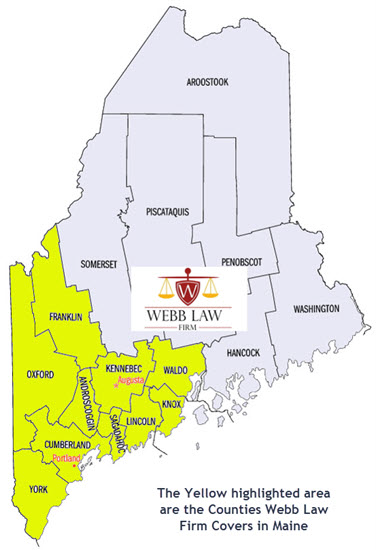
Webb Law Firm handles habitual offender cases across Maine. We review the records behind your label. We check whether the underlying convictions were entered properly. And we build the strongest defense we can for your situation. When the proof is hard to fight, we work with prosecutors to seek reduced charges or lighter sentences.
If you are a habitual offender and need to drive, or if you have been charged with driving after revocation, contact Webb Law Firm for a consultation. Getting a lawyer involved early can sometimes stop the label from being made final. It can also cut the penalties you face.
Do not wait until your court date. The sooner a lawyer looks at your case, the more options you may have.

Frequently Asked Questions About Habitual Offender Charges
Can I go to jail just for being declared a habitual offender?
The habitual offender label itself does not carry jail time. It is an action that revokes your license. Jail time comes if you are caught driving during the revocation period. That offense is a Class C felony in Maine. It carries up to 5 years in prison.
How many OUI convictions make you a habitual offender in Maine?
Three OUI convictions within five years can trigger habitual offender status. Each OUI counts as a major offense under Maine law. But OUI convictions can also combine with other qualifying offenses to reach the three-offense mark. You do not need three OUIs alone.
Is a habitual offender charge a felony in Maine?
Driving after habitual offender revocation is a Class C felony in Maine. A conviction carries up to 5 years in prison and a $5,000 fine. The habitual offender label itself is not a criminal charge. It is a license action by the Secretary of State.
Can a habitual offender designation be reversed in Maine?
The label can be challenged after the three-year ban ends. You can ask the Secretary of State to give your license back. In some cases, you can challenge the label sooner. This may work if one of the underlying convictions is thrown out or if the state made an error. A lawyer can review your record to see if a challenge makes sense.
What happens if I get pulled over as a habitual offender?
If you are caught driving during a habitual offender ban, you will be arrested and charged with a Class C felony. This is not a traffic ticket. You will be booked and may be held until bail is set. You face up to 5 years in prison if convicted. Your car may also be seized. Other serious offenses like indecent exposure also lead to felony charges and major effects.