 Southern Maine Criminal Lawyer Blog
What Is a DUI Device for Your Car?

An ignition interlock device (IID) is a small breathalyzer wired into your car’s ignition system. It requires you to provide an alcohol-free breath sample before the engine will start. If the device detects alcohol above a preset limit, the car will not start.
Most people know this device by informal names – a DUI blower, a DUI blowing device, or simply a blow device. It is installed after a drunk driving conviction. The formal term under Maine law is an ignition interlock device, or IID. The statute governing IID requirements in Maine is ignition interlock device requirements.
The core function is simple. You blow into a handheld mouthpiece connected to a unit mounted near your dashboard. The device measures your breath alcohol concentration (BAC). If your BAC reads below the programmed threshold, the ignition unlocks and you can start your car. If the reading comes back at or above the threshold, the vehicle stays off.
In our experience representing OUI clients in Maine courts, the ignition interlock period is often the most disruptive consequence of a conviction. It can be more disruptive than fines. The device affects your daily routine, your commute, and anyone who rides in your vehicle.
How Does an Ignition Interlock Device Work?
The IID consists of a handheld breath unit connected by a cord to an electronic control module. A certified technician wires the module into your vehicle’s ignition system during installation.
Before you start the car, you must blow into the mouthpiece using a specific hum-and-blow technique. This technique requires you to hum while exhaling into the device. It prevents someone from using an air pump or balloon to trick the sensor. The device analyzes your breath sample for alcohol content.
Maine IIDs are typically set to fail at a BAC of 0.02 or higher. This is far below the legal limit of 0.08. This strict threshold accounts for residual mouth alcohol and leaves almost no room for error. Even a small amount of alcohol in your system will trigger a lockout. Understanding how breathalyzer technology works in cars can help you better understand your device obligations.
If you pass the initial test, the engine starts normally. If you fail, the device logs the failed attempt and locks you out for a waiting period. Usually this period is a few minutes before you can try again.
Rolling Retests and Data Logging
The IID does not stop monitoring after you start the car. The device prompts random rolling retests while you drive. These typically occur every 15 to 45 minutes. When the device signals, you have a short window to provide a breath sample.
If you fail a rolling retest, the device does not shut off your engine. That would be dangerous on the road. Instead, it triggers your horn and flashing lights to alert other drivers and law enforcement. The device also logs the violation.
Every breath test result – pass or fail – is stored in the device’s memory. At regular calibration appointments, usually every 30 to 60 days, a technician downloads this data. The results go directly to the Maine Bureau of Motor Vehicles (BMV) and, in many cases, to the court overseeing your case. This data trail means every interaction with the device creates a permanent record.

When Is an IID Required in Maine?
Maine law mandates IID installation in several OUI scenarios under ignition interlock device requirements. The requirement can be mandatory or discretionary, depending on the circumstances of your case.
Mandatory IID installation applies when:
- You are convicted of a first-offense OUI with a BAC of 0.15 or higher (aggravated OUI)
- You refused a chemical test during the OUI stop
- You are convicted of a second or subsequent OUI offense
- IID installation is a condition of license reinstatement after an OUI-related suspension
Even for a standard first offense with a BAC below 0.15, a judge may order IID installation. This can be a condition of bail or probation. This discretionary authority means an IID can be part of your case even when the statute does not require it.
First-Offense vs. Repeat OUI Requirements
The length of the IID requirement depends on the offense level:
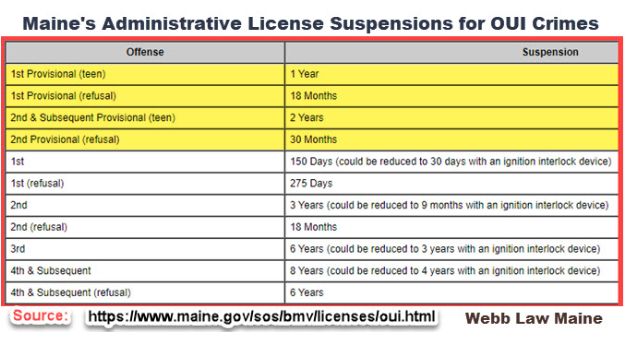
| Offense | Typical IID Duration |
|---|---|
| First offense (aggravated, BAC ≥ 0.15 or refusal) | 150 days to 1 year |
| Second offense | 1 to 3 years |
| Third offense or higher | 3 to 4+ years |
Early removal is generally not permitted. If you violate IID conditions during the restriction period, the BMV can extend the requirement. Each violation may add months to your original timeline.
The BMV monitors IID compliance through calibration data reports. Missed appointments, failed tests, or evidence of tampering all trigger review and potential extension.
Cost of an Ignition Interlock in Maine
The driver bears all costs for the IID. Maine law does not provide subsidies, and courts do not waive these fees.
Here are realistic cost ranges for 2026:
| Cost Component | Estimated Range |
|---|---|
| Installation | $75 – $150 |
| Monthly lease and calibration | $60 – $90 per month |
| Removal | $50 – $100 |
For a 150-day IID period (roughly five months), the total cost runs between $500 and $800 or more. A two-year requirement can cost $1,500 to $2,300+.
These figures are in addition to other OUI costs. Court fines, license reinstatement fees, and sharp increases in auto insurance premiums follow a conviction. Some IID providers offer payment plans, but the financial burden remains significant.
What Happens If You Violate Your IID Requirement?
IID violations carry serious consequences. Under IID violation penalties, the following actions count as violations:
- Failing a startup or rolling breath test
- Missing a scheduled calibration appointment
- Tampering with the device or attempting to disconnect it
- Driving a vehicle that does not have an IID installed
- Having someone else blow into the device for you
When the BMV receives a violation report, it can extend your IID period or impose additional license suspension. Tampering or circumvention may result in new criminal charges. A separate offense carries its own penalties.
False positives do occur. Mouthwash containing alcohol, certain breads and fermented foods, and some medications can trigger a failed reading. If you believe a violation was caused by a false positive, rinse your mouth with water and retest after a few minutes. Document what you ate or used before the test.
We have helped clients navigate disputes over alleged IID violations with the Maine BMV. The calibration data can sometimes support your case. You need to act quickly. Waiting too long to challenge a violation makes it harder to resolve.

Can You Avoid an IID After an OUI Charge?
Depending on the circumstances of your case, a DUI defense attorney may pursue several strategies to avoid or reduce IID requirements. These include:
- Challenging the traffic stop. If the officer lacked reasonable suspicion to pull you over, all evidence gathered afterward may be suppressed. This includes breath or blood test results.
- Contesting breath or blood test accuracy. Improperly calibrated testing equipment, procedural errors, or chain-of-custody issues can undermine the prosecution’s BAC evidence.
- Negotiating reduced charges. In some cases, an attorney can negotiate a plea to a lesser charge. A lesser charge does not carry a mandatory IID requirement.
- Arguing for alternative sentencing. A judge may have discretion to impose conditions other than IID installation. This depends on the offense level and your driving history.
Avoidance is not guaranteed. Each case depends on its facts, the strength of the evidence, and the court handling the matter.
A client came to us after a first-offense OUI with a 0.16 BAC. The mandatory IID installation was unavoidable given the aggravated BAC level. We negotiated terms that allowed them to maintain their work commute during the restriction period. Early legal intervention – before conviction – offers the best chance of minimizing IID consequences. Understanding what happens on your first DUI can help you prepare a defense strategy.
In our experience handling OUI cases in Maine district courts, the strongest outcomes come from challenging the charge itself. This is more effective than fighting the IID requirement after the fact. An attorney can evaluate whether suppression motions, evidentiary challenges, or plea negotiations give you a realistic path forward.

Talk to a Maine OUI Defense Attorney About Your Case
If you are facing an OUI charge or already dealing with an IID requirement, understanding your obligations early matters. The decisions you make now affect your defense strategy. They affect your ability to negotiate plea terms and your timeline for license reinstatement.
Webb Law Firm handles OUI cases across Maine. We are familiar with local BMV procedures, court expectations, and the IID compliance process. Whether you need help challenging an OUI charge or navigating a disputed IID violation, our team can evaluate your situation.
Contact Webb Law Firm for a free consultation. The sooner you get legal guidance, the more options you may have.

Frequently Asked Questions About DUI Devices
How long do you have to have an ignition interlock device in Maine?
The duration depends on your offense. An aggravated first-offense OUI typically requires 150 days to one year. Second offenses carry one to three years, and third or subsequent offenses may require three to four years or longer. Violations during the IID period can extend the requirement. The Maine BMV monitors compliance through regular calibration reports.
Can you drive someone else’s car with an IID requirement?
No. If you have an IID requirement, Maine law generally prohibits you from driving any vehicle without an approved IID installed. Driving a non-equipped vehicle counts as a violation and can result in extended IID periods or additional license suspension. You may face new criminal charges.
What foods or products can cause a false positive on an IID?
Mouthwash containing alcohol is the most common cause of false positives. Certain breads, ripe fruits, fermented foods, and some medications can also trigger a failed reading. If you get an unexpected fail, rinse your mouth with water and wait a few minutes before retesting. Document what you consumed before the test in case you need to dispute the result.
How much does an ignition interlock device cost per month in Maine?
Monthly lease and calibration fees typically range from $60 to $90 per month in Maine. This does not include the one-time installation fee ($75 to $150) or the removal fee ($50 to $100). The driver pays all costs. Some providers offer payment plans, but no state subsidies are available.
Does a first-time OUI in Maine require an ignition interlock?
A standard first-offense OUI with a BAC below 0.15 does not carry a mandatory IID requirement. However, if your BAC was 0.15 or higher, you refused a chemical test, or a judge orders it as a condition of bail or probation, an IID may still be required. An attorney can evaluate whether your specific case triggers a mandatory or discretionary IID obligation.